

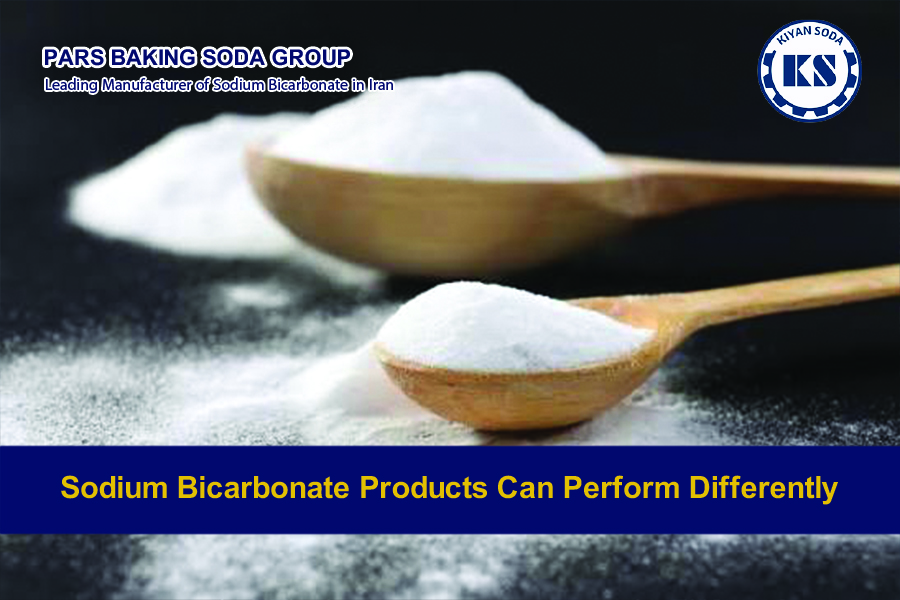

Chemical purity is often the first specification buyers consider when comparing sodium bicarbonate products. A purity value of 99% or higher may suggest that two products are nearly identical. However, matching purity figures do not necessarily mean they will behave the same way during storage, handling, mixing, or processing. Chemical composition represents only one aspect of product quality. Physical characteristics such as particle size, particle size distribution, moisture content, bulk density, and particle morphology can also influence performance. Dissolution behavior is another important consideration, particularly in processes where sodium bicarbonate must disperse or dissolve within a specific period. Understanding why sodium bicarbonate performance differs despite identical chemical purity helps manufacturers evaluate products beyond a single assay result. This difference is closely related to sodium bicarbonate quality consistency, since both physical specifications and chemical properties contribute to predictable results across production batches.
Why Sodium Bicarbonate Performance Differs Despite Identical Chemical Purity
Chemical purity indicates the proportion of sodium bicarbonate in a sample, usually determined through a specified analytical method. It provides information about the principal compound and the presence of other chemical components. However, purity does not describe every property that determines how a powder behaves during processing.
For example, two products may both contain 99.5% sodium bicarbonate but have different particle size distributions, moisture levels, or bulk densities. These differences may not significantly change the measured chemical composition, yet they can influence powder flow, storage stability, dispersion, and dissolution behavior. This explains why sodium bicarbonate performance differs even when reported purity values are identical.
High-purity sodium bicarbonate is important in applications where chemical composition and impurity limits are tightly controlled. Nevertheless, a high assay value alone does not establish suitability for every application. Specifications may also include limits for chloride, sulfate, insoluble matter, moisture, iron, and other contaminants, depending on the intended use and applicable standard. The analytical basis of a reported purity value also matters. Results calculated on a dried basis are not directly equivalent to measurements that include the sample’s moisture content. Buyers should therefore review the complete technical data sheet and certificate of analysis rather than relying exclusively on the headline purity percentage.
The pH of sodium bicarbonate solutions is another relevant chemical characteristic. However, pH is measured in an aqueous solution, not directly in dry powder. Its value depends on solution concentration, temperature, preparation procedure, and measurement conditions. Sodium bicarbonate solutions are generally mildly alkaline, but their pH should not be treated as a direct measure of product purity or dissolution speed.
How Particle Size and Distribution Affect Sodium Bicarbonate Performance
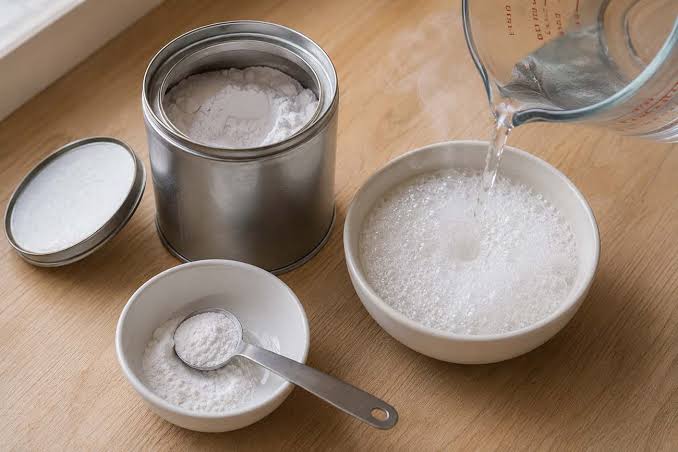
Particle size is a physical characteristic that influences powder behavior. It affects the surface area available for interaction with liquids and may also influence dispersion, dust formation, flowability, and material handling. These characteristics help explain why sodium bicarbonate performance differs between products with similar chemical specifications. Smaller particles generally provide more surface area relative to their mass. When exposed to water under comparable conditions, this greater contact area can support faster dissolution. However, particle size is not the only factor involved. Temperature, agitation, concentration, and particle agglomeration also affect the result.
For particles with similar shape and density, reducing average particle diameter generally increases the surface area available for contact with water. This can accelerate dissolution, although very fine powders may create handling challenges, including dust generation, aggregation, and changes in flowability.
Average particle size alone does not provide a complete picture. Particle size distribution (PSD) describes the range and proportion of particle sizes within a sample. Two products may have the same average particle diameter but substantially different distributions. One may contain particles within a relatively narrow range, while another includes a mixture of very fine and coarse particles.
A broad distribution can influence mixing, feeding, and powder segregation during transportation or handling. Differences in particle size and mass may cause some fractions to separate, affecting the uniformity of material delivered to a production process. Parameters such as D10, D50, and D90 provide a more complete description of particle distribution than a single average value. They represent the particle diameters below which 10%, 50%, and 90% of the measured particle population fall, respectively.
Particle morphology also matters. Differences in particle shape and surface texture can influence how sodium bicarbonate moves through hoppers, feeders, and conveying systems. Irregular particles or aggregates may behave differently from more uniform particles. Bulk density, which describes the mass of powder occupying a given bulk volume, can also affect storage capacity and volumetric feeding accuracy.
The appropriate particle characteristics depend on the intended application. A process requiring rapid dissolution may favor a finer powder, while an operation prioritizing controlled feeding or reduced dust may require a different particle profile. Evaluating these properties together helps explain why sodium bicarbonate performance differs across applications.
Understanding Dissolution Kinetics of Sodium Bicarbonate
Dissolution is important when sodium bicarbonate is used in aqueous processing, water treatment, feed preparation, or other applications requiring the material to enter solution. However, dissolution behavior should not be confused with solubility. Solubility refers to the maximum amount of a substance that can dissolve in a given quantity of solvent under specified conditions, such as temperature and pressure. Dissolution rate describes how quickly the solid enters the solution.
A finer sodium bicarbonate powder may dissolve faster because it provides a greater surface area for contact with water. Nevertheless, reducing particle size does not necessarily increase the compound’s equilibrium solubility. When two products have the same chemical composition and are tested under identical conditions, their equilibrium solubility is generally governed by the compound and the solution environment rather than their initial particle size.
Several factors influence dissolution kinetics. Temperature affects sodium bicarbonate solubility and the conditions under which dissolution occurs. Agitation improves contact between particles and the surrounding liquid, helping distribute the material and reduce localized concentration differences.
Agglomeration can slow dissolution by preventing water from immediately reaching all particle surfaces. Although individual particles may be fine, aggregates can behave like larger particles and reduce the effective surface area available for contact. The order of addition and mixing method also influence the result. For example, rapidly adding a large quantity of powder to a poorly agitated liquid may promote clumping.
For meaningful comparisons, dissolution tests should use controlled conditions, including the same water temperature, concentration, mixing speed, and addition procedure. Otherwise, differences in test conditions may be mistaken for differences in product quality. These controls are also important when investigating why sodium bicarbonate performance differs in practical applications.
Why Sodium Bicarbonate Quality Consistency Matters Across Production Batches

A product that performs well in one delivery may not provide the same results in subsequent deliveries if its physical characteristics vary significantly between production batches. This is why sodium bicarbonate quality consistency is important in long-term procurement and process management.
Even when every batch meets the required chemical purity, variations in moisture, particle size distribution, or bulk density may affect dosing, mixing, and material handling. In automated production systems, these differences can require adjustments to feeding rates or mixing conditions. Maintaining sodium bicarbonate quality consistency helps reduce such variations and supports more predictable production.
Moisture content deserves particular attention because exposure to humid conditions can contribute to caking and reduced powder flowability. Sodium bicarbonate is generally stable in dry air but can slowly decompose in moist air. Suitable packaging and storage conditions help protect product quality during transportation and warehousing. Bulk density and particle size distribution should also be monitored. Changes in these properties may influence the amount of material delivered by volumetric feeders and the consistency of powder movement through processing equipment.
A Certificate of Analysis (COA) provides documented information about the tested characteristics of a specific batch. It commonly includes chemical assay results and may report moisture, pH under defined conditions, insoluble matter, or other relevant parameters. However, a COA reporting only chemical purity may not provide enough information for processes sensitive to particle size or powder handling.
Buyers should request additional data when necessary, including particle size distribution and bulk density. They should also consider the analytical methods, sampling procedures, and acceptance limits used by the supplier. Consistent sampling and comparable test methods are essential for verifying sodium bicarbonate quality consistency between production batches.
How to Evaluate Sodium Bicarbonate Grades and Select the Right Product
Selecting sodium bicarbonate should begin with the technical requirements of the intended application. Chemical purity, impurity limits, particle size, moisture, bulk density, and dissolution behavior should be evaluated in relation to actual operating conditions. These factors also help determine whether a product can maintain the required sodium bicarbonate quality consistency during routine use.
Food Grade Sodium Bicarbonate is intended for food-processing applications and must meet relevant food-grade specifications and regulatory requirements. These address more than assay values and may include limits for specific contaminants and appropriate manufacturing controls. Industrial Grade Sodium Bicarbonate is used in technical and manufacturing processes, including selected water treatment, cleaning, and chemical applications. Its specifications are designed around the requirements of those uses. However, it is not accurate to assume that every industrial-grade product necessarily has lower purity than a food-grade product. The grades may differ in impurity limits, physical characteristics, intended use, and applicable approvals.
Feed applications require separate consideration. Sodium bicarbonate may be included in animal feed formulations, including those for ruminants and poultry, but the product must meet relevant feed requirements. Buyers should verify feed-grade suitability, contaminant limits, and supplier documentation rather than assuming that food-grade compliance automatically establishes suitability for every feed application.
The product’s physical characteristics can also influence feed manufacturing. Particle size and flowability may affect premixing, distribution within a feed blend, and dosing consistency. In industrial applications, relevant properties depend on the process: dissolution may be important in water treatment, while flowability and particle distribution may be more relevant in powder-handling operations.
A Hypothetical Comparison of Two Products With Identical Purity
Consider two hypothetical sodium bicarbonate products, both reporting a chemical purity of 99.5%. Despite their identical assay values, their physical characteristics may differ.
| Parameter | Product A | Product B |
| Chemical purity | 99.50% | 99.50% |
| Particle size | Fine and relatively uniform | Broader particle size distribution |
| Moisture | Lower moisture content | Slightly higher moisture content |
| Bulk density | More consistent | More variable |
| Flowability | Good flowability | Greater tendency to aggregate |
| Dissolution behavior | Potentially faster dissolution under comparable conditions | Potentially slower dissolution under comparable conditions |
Illustrative comparison only. These are hypothetical characteristics, not measured results or actual product specifications. In this example, Product A may provide more predictable feeding and faster dissolution under identical test conditions because of its finer and more uniform particle distribution. Product B may require closer attention during storage and handling if moisture or particle aggregation affects its flowability.
These observations are not universal rules. A finer product is not automatically better for every process, and actual performance depends on equipment, formulation, and operating conditions. Buyers should compare complete specifications and, where necessary, conduct application-relevant tests before selecting a product.
Conclusion
Two sodium bicarbonate products with identical chemical purity can perform differently because chemical composition is only one part of overall product quality. Particle size, distribution, morphology, moisture, and bulk density can influence dissolution kinetics, powder handling, and process consistency. These factors explain why sodium bicarbonate performance differs even when products meet the same purity specification.
For manufacturers and Industrial Grade Sodium Bicarbonate buyers, selecting the right product requires evaluating these characteristics alongside chemical specifications. Reviewing technical data sheets, comparing batch-specific COAs, and conducting application-relevant tests can help identify a product that meets operational requirements. Ultimately, sodium bicarbonate quality consistency depends not only on chemical purity, but also on how reliably the product’s physical and chemical properties meet the needs of the process.
Frequently Asked Questions
Yes. Chemical purity does not fully describe physical properties such as particle size distribution, moisture, bulk density, or morphology. These characteristics can influence dissolution, flowability, mixing, and handling. They are among the main reasons sodium bicarbonate performance differs between products with matching assay values.
Generally, smaller particles can dissolve faster under comparable conditions because they provide more surface area for contact with water. However, temperature, agitation, concentration, and agglomeration also affect dissolution.
Solubility describes the maximum amount that can dissolve under specified conditions, while dissolution rate describes how quickly the material enters the solution. Particle size may affect dissolution rate but does not necessarily increase equilibrium solubility.
Particle size distribution influences powder handling, mixing, feeding, and dissolution. A controlled distribution may support more predictable processing, while a broad distribution can contribute to segregation or inconsistent feeding in some systems.
No. High purity is important, but it does not guarantee optimal physical or functional performance. Product selection should also consider particle size, moisture, bulk density, impurity limits, and the requirements of the intended process.
Buyers can compare batch-specific COAs, review supplier quality-control procedures, and monitor parameters such as assay, moisture, particle size distribution, and bulk density. Consistent sampling and testing methods are essential for maintaining sodium bicarbonate quality consistency.