




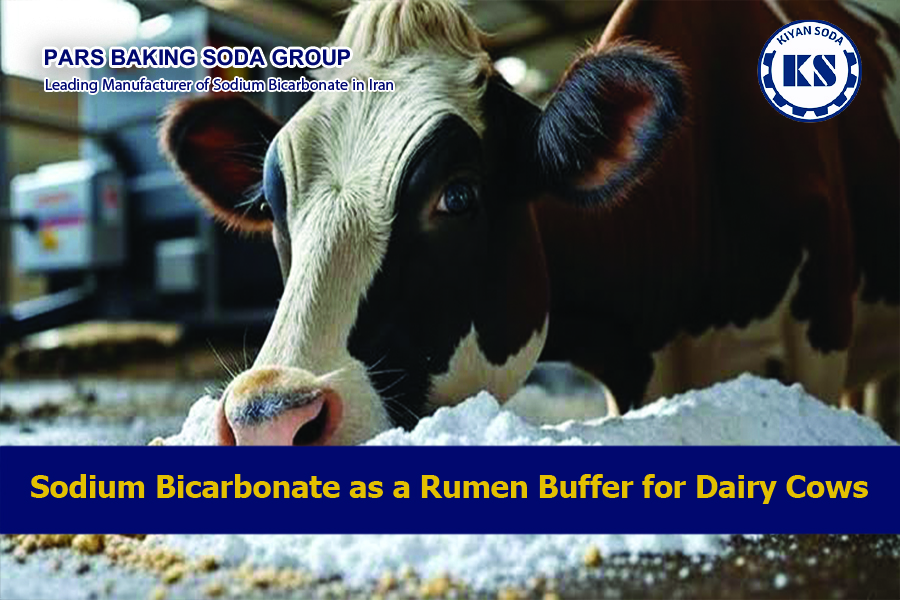
Maintaining a stable rumen environment is essential for microbial fermentation, fiber digestion, nutrient utilization, and productive performance in dairy cows. During fermentation, rumen microorganisms convert dietary carbohydrates into volatile fatty acids (VFAs), which provide an important source of energy but also contribute to the acid load within the rumen. This becomes particularly important in high-producing dairy cows receiving energy-dense diets with substantial amounts of rapidly fermentable carbohydrates. Under these conditions, acid production can increase and place greater demands on the rumen’s natural buffering system. Sodium bicarbonate is widely used as a dietary rumen buffer because it supplies bicarbonate, which can help neutralize excess hydrogen ions and moderate changes in ruminal acidity. However, its effectiveness depends on the complete ration, including forage quality, effective fiber, carbohydrate fermentability, feed intake, mineral balance, and feeding management. Sodium bicarbonate should therefore complement, rather than replace, appropriate ration formulation and overall rumen-health management.
Rumen Buffering and Acid–Base Balance in Dairy Cows
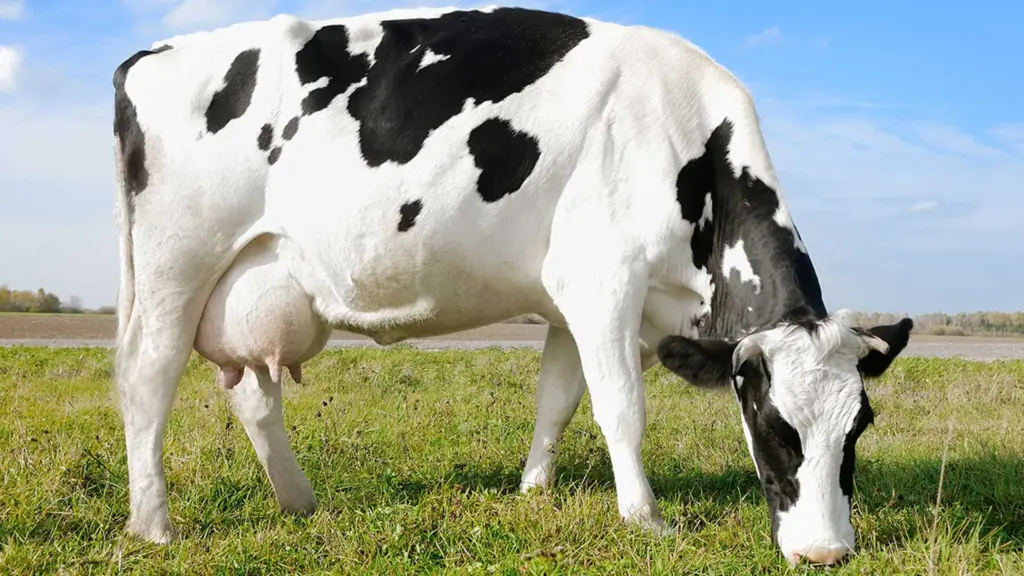
The rumen is a dynamic fermentation environment where microbial activity continuously produces acids. Maintaining an appropriate ruminal pH depends on the balance between acid production, absorption and utilization, and buffering processes. A rumen buffer contributes to this balance by helping control hydrogen ion concentration, but buffering capacity is only one component of rumen pH regulation. Saliva production, dietary fiber, forage characteristics, microbial activity, feed intake, and carbohydrate fermentation rate also influence rumen conditions.
Rumen pH and Microbial Fermentation
Rumen pH affects microbial activity and composition as well as nutrient digestion. Fiber-digesting microorganisms are particularly sensitive to prolonged exposure to low pH. Rapidly fermentable starches and sugars can increase acid production, and when acid production exceeds the capacity for buffering and removal, ruminal pH can decline.
However, the duration of low pH is as important as the magnitude of the decline. A temporary reduction in pH after feeding can be a normal part of fermentation, whereas prolonged or repeated exposure to low pH may impair fiber digestion and microbial activity. Maintaining an appropriate balance between fermentable energy and effective fiber is therefore important for a stable rumen environment.
Acid Load, SARA and Ruminal Acidosis
A temporary post-feeding decline in ruminal pH does not necessarily indicate disease. However, repeated or prolonged periods of low pH can interfere with fermentation and fiber digestion. Subacute ruminal acidosis (SARA) is associated with repeated periods of low ruminal pH and can be influenced by high levels of rapidly fermentable carbohydrates, inadequate effective fiber, abrupt dietary changes, feed sorting, and inconsistent feed intake.
Clinical ruminal acidosis is a more severe condition that requires appropriate nutritional management and, when necessary, veterinary evaluation. Sodium bicarbonate can provide additional buffering when acid load is elevated, but it does not remove the underlying causes of excessive acid production. Its use should therefore be considered alongside the complete ration, forage quality, and feeding management.
Natural Rumen Buffering Through Saliva
Saliva is one of the major natural sources of buffering compounds in the rumen. Chewing and rumination stimulate saliva secretion, and saliva contains bicarbonate and other components that contribute to acid–base regulation.
Effective dietary fiber supports chewing and rumination and can therefore contribute to natural rumen buffering. Supplemental sodium bicarbonate can support these mechanisms but should not be considered a replacement for adequate forage, effective fiber, or appropriate feeding management.
How Sodium Bicarbonate Works as a Rumen Buffer
Sodium bicarbonate supplies bicarbonate ions that can react with hydrogen ions and help moderate ruminal acidity. The overall reaction can be represented as:
HCO₃⁻ + H⁺ → CO₂ + H₂O
Through this reaction, bicarbonate helps reduce free hydrogen ion concentration and moderate acidity. The practical effect of a rumen buffer, however, depends on the amount and timing of acid production, the buffering capacity of the diet, saliva secretion, and fermentation rate. Buffering does not stop acid production; rather, it helps the rumen manage the acid load.
Neutralization of Rumen Acidity
Bicarbonate supplied by sodium bicarbonate can react with hydrogen ions and help moderate ruminal acidity. The magnitude of this effect depends on the conditions within the diet and rumen.
For example, excessive intake of rapidly fermentable starch, insufficient effective fiber, or poor feed management can increase acid load. Under these conditions, a buffer alone cannot correct the factors responsible for excessive acid production. Sodium bicarbonate should therefore be viewed as a nutritional tool that supports rumen buffering capacity rather than as a solution for an improperly formulated ration.
Effects on Rumen pH and Fermentation
Research has shown variable effects of sodium bicarbonate on rumen pH and fermentation. Factors such as forage-to-concentrate ratio, fiber concentration, carbohydrate fermentability, acid load, and stage of production can influence the response.
Some studies have reported improvements in rumen conditions or dry matter intake, while others have found limited effects on ruminal pH or production-related outcomes. These differences indicate that the response to a rumen buffer should be interpreted in the context of the basal diet and overall feeding system rather than as a uniform response across all dairy herds.
Sodium Bicarbonate in Dairy Cow Diets
The value of sodium bicarbonate as a rumen buffer depends on the complete ration and how the feed is delivered. It may be particularly relevant when acid load is elevated or when additional buffering support is required, but its inclusion should always be considered as part of the overall nutritional program.
- High-Concentrate and High-Energy Diets
High-producing dairy cows may receive energy-dense diets containing substantial amounts of rapidly fermentable carbohydrates. Under these conditions, sodium bicarbonate may provide additional buffering capacity. However, a high concentrate level alone does not establish a definite need for supplementation.
Research has shown that when the basal ration already provides appropriate fiber and buffering conditions, adding sodium bicarbonate may produce limited changes in some performance measures. Therefore, the need for additional buffering should be assessed according to the actual composition and management of the ration.
- Total Mixed Ration and Feed Distribution
A total mixed ration (TMR) combines forages, concentrates, minerals, and other dietary components to provide a relatively uniform supply of nutrients in each feeding. Consistent mixing is important because uneven distribution of sodium bicarbonate can result in differences in intake among animals.
Feed sorting can also alter the actual composition of the ration consumed by individual cows. As a result, cows may receive different amounts of fiber, starch, sodium, and bicarbonate than intended by the formulated diet. Feeding frequency, feed access, and management of refusals can further influence intake patterns and rumen fermentation.
- Dietary Fiber and Forage Balance
Effective fiber plays an important role in stimulating chewing, rumination, and saliva secretion. Forage particle size, physically effective NDF (peNDF), forage quality, and the amount of rapidly fermentable carbohydrates all contribute to the balance of the rumen environment.
Sodium bicarbonate can complement appropriate fiber and forage management, but it cannot compensate for inadequate effective fiber or an inappropriate forage-to-concentrate balance. For this reason, the role of a rumen buffer should always be evaluated together with the structure and composition of the complete ration.
Effects of Sodium Bicarbonate on Dairy Cow Performance

Sodium bicarbonate may influence dry matter intake, rumen function, and some production-related measures through its effects on rumen conditions. However, responses have not been consistent across studies and depend on diet composition and feeding management.
Some studies have reported increased dry matter intake (DMI) when additional buffering capacity was relevant, while others found little or no significant effect on feed intake. Similarly, some trials have reported increases in milk yield or milk fat, whereas these responses have not been consistently observed under all dietary conditions.
Differences in basal diet, acid load, effective fiber, buffer type and inclusion level, and herd management may contribute to these variable results. Sodium bicarbonate should therefore not be treated as a guaranteed milk-production enhancer. Its effects should be evaluated within the context of the complete feeding program and the actual nutritional conditions of the herd.
- Factors Affecting Rumen Buffer Performance
The effectiveness of a rumen buffer is determined by its interaction with the entire feeding and management system. Diet composition, acid load, sodium supply, inclusion level, and feed distribution can all affect the response to sodium bicarbonate.
- Diet Composition and Acid Load
Starch level, carbohydrate fermentability, forage-to-concentrate ratio, forage quality, and effective fiber influence acid production in the rumen. The characteristics and fermentation rate of dietary starch are particularly relevant because rapid fermentation can increase acid load.
Abrupt dietary changes may also affect microbial adaptation and rumen stability. For this reason, the performance of a buffer should be assessed in relation to the complete ration and its potential acid load.
- Sodium Supply and Mineral Balance
Sodium bicarbonate supplies both bicarbonate and sodium. Its use should therefore be considered alongside total sodium intake from feed ingredients, mineral supplements, and drinking water. Electrolyte balance and, in specific nutritional programs, the relationship between dietary cations and anions may also be relevant. Sodium bicarbonate supplementation should consequently form part of the broader assessment of dietary mineral balance.
- Inclusion Level and Feeding Management
There is no single inclusion level that applies to every dairy cow or ration. The appropriate amount depends on factors such as ration composition, dry matter intake, stage of production, acid load, sodium supply, and feeding management.
In addition to inclusion level, uniform mixing and feed distribution are important. Poor mixing or feed sorting can cause differences in actual buffer intake among cows and may influence the overall response of the herd.
Feed-Grade Sodium Bicarbonate for Dairy Cow Applications
For feed manufacturers, nutritionists, and procurement teams, the quality of sodium bicarbonate is an important consideration because product consistency and specifications can affect its use in feed formulation and feeding management.
When selecting feed grade sodium bicarbonate for dairy cows, factors such as purity, moisture content, particle-size distribution, physical consistency, undesirable impurities, and batch-to-batch consistency should be considered. A Certificate of Analysis (COA) can provide information on agreed product specifications and support quality control for individual batches.
Packaging and storage conditions should protect the product from moisture and contamination. In addition, applicable feed regulations and quality requirements in the target market should be reviewed before purchasing or using the product. Ultimately, sodium bicarbonate quality should be evaluated together with the actual requirements of the ration and herd. Even a product with appropriate specifications cannot compensate for an unbalanced ration or inadequate feed management.
Conclusion
Sodium bicarbonate can function as a rumen buffer by supplying bicarbonate and helping moderate ruminal acidity. Its value may be greater when buffering demand is elevated, but its effectiveness depends on the complete ration and feeding management. Adequate effective fiber, an appropriate forage-to-concentrate balance, controlled carbohydrate fermentability, consistent feed distribution, sufficient rumination, and appropriate mineral formulation remain fundamental to rumen health. Research has shown variable responses to sodium bicarbonate supplementation, so its use should be evaluated according to the specific nutritional requirements and conditions of the herd rather than on the expectation of a uniform response.
Frequently Asked Questions
Sodium bicarbonate supplies bicarbonate ions that can react with hydrogen ions in the rumen and help moderate acidity. Its practical effect depends on acid production, diet composition, saliva production, and overall feeding management.
Sodium bicarbonate can provide additional buffering capacity when ruminal acid load is elevated. However, it does not eliminate the underlying causes of excessive acid production. Effective fiber, appropriate carbohydrate levels, gradual diet changes, and proper feeding management remain important for controlling the risk of ruminal acidosis.
Not necessarily. Some studies have reported improvements in milk yield or milk fat, while others have found limited or no significant effects. Responses depend on the basal ration, buffering demand, inclusion level, and management conditions.
There is no universal inclusion level for all dairy cows. The appropriate amount should be determined based on the complete ration, sodium supply, dry matter intake, production stage, acid load, and feeding management. Consistent mixing and distribution are also important to achieve uniform intake.