


Maintaining proper pool water chemistry is essential for swimmer comfort, effective disinfection, and equipment protection. Changes in pH can affect chlorine performance and contribute to corrosion, scale formation, or cloudy water. Sodium bicarbonate is widely used in pool maintenance to increase total alkalinity and help stabilize pH fluctuations. Its primary function is to improve the water’s buffering capacity rather than directly raise pH in every situation. Understanding this distinction helps pool operators choose appropriate treatments, calculate dosage, and maintain consistent water quality. Effective pool pH balance also requires regular testing, an understanding of the factors that influence water chemistry, and careful selection of a product suitable for the intended application.
Understanding pH and Total Alkalinity in Pool Water
pH and total alkalinity are closely related, but they measure different chemical properties. Understanding their individual roles is essential when diagnosing water-quality problems and selecting the correct treatment.
The Difference Between pH and Total Alkalinity
pH indicates how acidic or alkaline water is based on hydrogen ion activity. Because the pH scale is logarithmic, a one-unit change represents a tenfold change in hydrogen ion activity. Total alkalinity measures the water’s capacity to neutralize acids. In typical swimming pools, bicarbonate ions provide most of this buffering capacity, although carbonate and hydroxide ions can also contribute.
Water may have an acceptable pH but insufficient alkalinity, making it vulnerable to sudden changes. Conversely, excessive alkalinity can make pH adjustments more difficult and contribute to persistent upward pH drift under certain conditions.
For reliable pool pH balance, both parameters should be measured independently. Adjusting pH without checking alkalinity may provide only a temporary correction, while increasing alkalinity unnecessarily can complicate subsequent treatment.
Why Total Alkalinity Matters
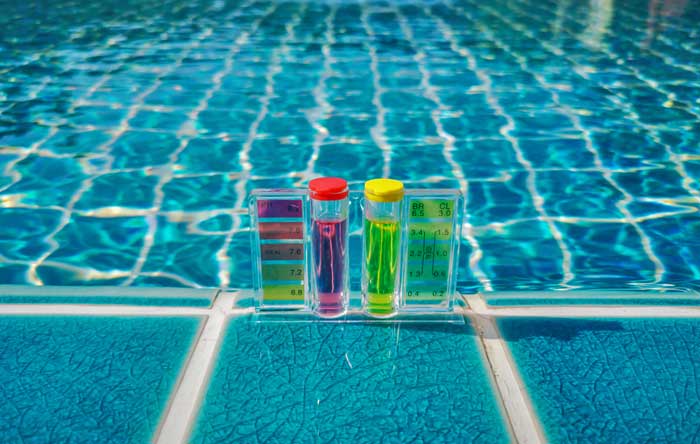
Total alkalinity helps moderate pH changes caused by acidic or alkaline substances entering the pool through disinfectants, source water, swimmer activity, and chemical treatments. When alkalinity is too low, the water has less buffering capacity, so additions of acidic chemicals may produce more pronounced pH changes. High alkalinity can make pH reduction more difficult and, under certain conditions, contribute to upward pH drift.
The appropriate target depends on the pool system, disinfectant type, and operating recommendations. Calcium hardness, water temperature, and dissolved solids also influence overall water balance. Operators should therefore evaluate these parameters together when investigating recurring scale formation or other water-quality problems.
How Sodium Bicarbonate Supports Pool pH Balance
Sodium bicarbonate (NaHCO₃), also known as sodium hydrogen carbonate or baking soda, dissolves in water and supplies bicarbonate ions. In swimming-pool maintenance, its principal use is to increase total alkalinity when measurements indicate that the buffering capacity is insufficient.
The Buffering Mechanism of Sodium Bicarbonate
Bicarbonate ions participate in the equilibrium between dissolved carbon dioxide, carbonic acid, bicarbonate, and carbonate. This system helps moderate pH changes when acidic or alkaline substances enter the water. Adding sodium bicarbonate increases alkalinity and can improve pH stability. However, its effect on total alkalinity is generally more pronounced than its immediate effect on pH. The actual response depends on the initial water chemistry, particularly existing alkalinity, dissolved carbon dioxide, and conditions that promote gas exchange.
For example, aeration can remove dissolved carbon dioxide from pool water and encourage pH to rise without a corresponding increase in total alkalinity. This explains why pH may continue to increase even when alkalinity measurements appear relatively stable.
Understanding these interactions helps operators distinguish between a genuine alkalinity deficiency and other causes of changing pH. Sodium bicarbonate is most useful when the measured alkalinity indicates that additional buffering capacity is needed, rather than whenever the pH moves outside its target range.
Understanding the pH of Sodium Bicarbonate Solutions
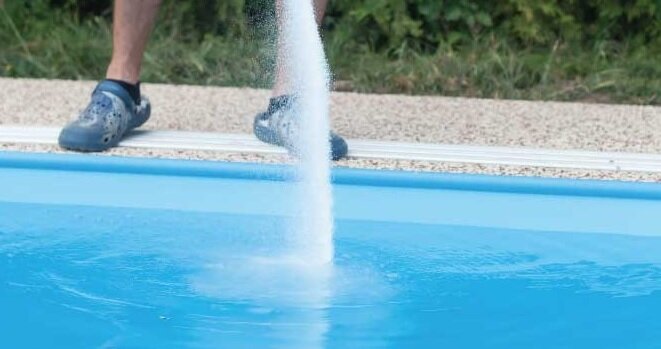
The pH of sodium bicarbonate solutions is not the same as the pH of pool water after treatment. A freshly prepared 0.1-molar aqueous solution has a pH of approximately 8.3 at 25°C, although measured values depend on concentration, temperature, and preparation conditions. This mildly alkaline character does not mean that adding sodium bicarbonate will raise pool water to pH 8.3. Pool water contains dissolved minerals, disinfectants, and other substances that influence its chemical equilibrium. Its response depends on the existing pH, total alkalinity, dissolved carbon dioxide, and other operating conditions.
Consequently, the pH of sodium bicarbonate alone cannot predict treatment results. Operators must test the actual pool water and assess both pH and total alkalinity before deciding on an adjustment.
Sodium bicarbonate should also not be confused with sodium carbonate, commonly known as soda ash. Although both compounds affect water chemistry, sodium carbonate generally produces a more substantial increase in pH and is often used when pH itself needs to be raised. Choosing between them requires identifying which parameter needs correction.
When Sodium Bicarbonate Is Appropriate
Sodium bicarbonate is most appropriate when measured total alkalinity falls below the target specified for the pool system. Increasing alkalinity can improve buffering capacity and make subsequent pH management more predictable.
It is not a disinfectant and cannot replace chlorine or another approved sanitizer. Nor does it independently resolve every cause of cloudy water, corrosion, or scale formation. For dependable pool pH balance, operators should first identify the underlying water-chemistry problem, then select a treatment based on measured conditions rather than assumptions.
How to Use Sodium Bicarbonate in Pool Maintenance
Correct application requires accurate measurements, appropriate dosage calculations, and follow-up testing. Pool volume, initial alkalinity, and product instructions all influence treatment requirements.
Testing Water and Calculating Dosage
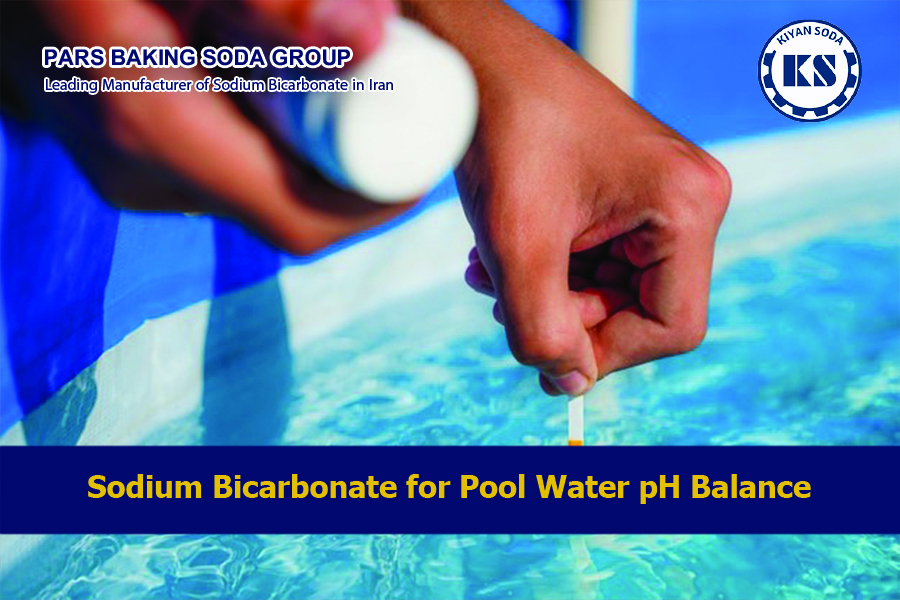
Before treatment, measure pH and total alkalinity using a suitable pool-water test kit or calibrated instrument. Check the pool’s volume and compare the results with the operating targets recommended for the system. The U.S. Centers for Disease Control and Prevention (CDC) recommends routinely checking pH and chlorine concentration because both are important to swimming-pool safety and effective disinfection.
As a general reference, approximately 1.4 pounds of sodium bicarbonate per 10,000 US gallons of water can increase total alkalinity by about 10 ppm. This is an estimate rather than a universal dosing instruction; actual results may vary with water chemistry and product characteristics. Calculate the required amount from the measured alkalinity deficit and the pool volume, then verify the result against the product instructions. Avoid large, unverified additions, and never mix concentrated pool chemicals together.
Retesting and Monitoring Results
Allow adequate water circulation after application, following the product instructions or established treatment procedure. Retest pH and total alkalinity before deciding whether further treatment is necessary.
Repeated additions without measurement can cause excessive alkalinity, making subsequent pH adjustments more difficult. Keeping records of test results, chemical additions, and follow-up measurements can help identify recurring problems and improve dosing consistency.
Regular monitoring is especially important after heavy pool use, substantial rainfall, or changes in source water. These conditions can alter water chemistry and increase the need for corrective treatment.
Choosing the Right Sodium Bicarbonate Grade
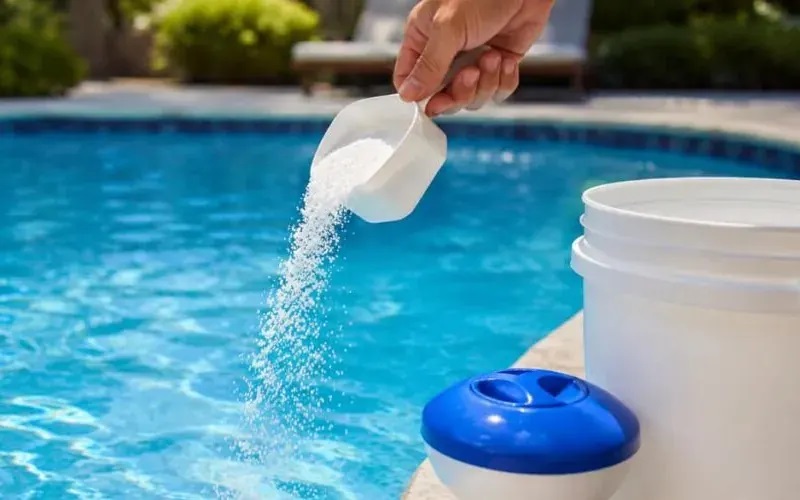
The suitability of sodium bicarbonate for pool-water treatment depends on its chemical composition and relevant quality parameters. Sodium bicarbonate assay, moisture content, water-insoluble residue, and specified impurity limits can help characterize a product and determine whether it meets the requirements of its intended application.
These parameters are relevant to pool maintenance because the material introduced into the water should contribute predictably to bicarbonate alkalinity without introducing undesirable residues. Water-insoluble matter, for example, may increase suspended particles or contribute to deposits, while certain impurities may affect water quality depending on their identity and concentration.
An industrial grade Sodium Bicarbonate designation does not, by itself, confirm compliance with swimming-pool treatment requirements. Product specifications should therefore be evaluated alongside the manufacturer’s technical documentation and any applicable standards for the intended use. Where available, a certificate of analysis (COA) can provide batch-specific data for assessing conformity with the declared composition and impurity limits.
Although sodium bicarbonate has the same chemical formula, NaHCO₃, across different product categories, this does not mean that every formulation is suitable for direct addition to swimming pools. The intended application, manufacturing controls, impurity profile, and documented quality specifications all influence whether a product is appropriate for water treatment. Products labeled household use grade baking soda are generally intended for specified domestic applications, such as food preparation or household cleaning. Unless the manufacturer explicitly documents their suitability for swimming-pool water treatment, they should not be assumed to meet the requirements of this application. A shared active ingredient is not sufficient evidence of equivalent impurity control or product performance.
For effective pool pH balance, product selection must be considered separately from dosage calculation. Even a product with an appropriate sodium bicarbonate concentration will primarily increase total alkalinity and buffering capacity; its effect on pH depends on the pool water’s existing chemistry, including its alkalinity, dissolved carbon dioxide, and current pH. Chemical identity alone cannot establish either the suitability of a product or the outcome of its addition to pool water.
Common Pool Water Balancing Mistakes
Several recurring mistakes can make routine maintenance less effective:
- Using bicarbonate for every pH problem: Sodium bicarbonate primarily increases total alkalinity and may not be appropriate when pH alone requires correction.
- Ignoring alkalinity measurements: Testing pH without checking alkalinity may leave the underlying cause of instability unresolved.
- Adding chemicals without retesting: Unverified additions can produce excessive alkalinity or other imbalances.
- Confusing solution pH with treatment results: The pH of a sodium bicarbonate solution does not determine the final pH of pool water.
- Overlooking calcium hardness: Calcium concentration, pH, alkalinity, and temperature interact to influence the potential for scale formation.
- Assuming all grades are interchangeable: Product specifications and intended applications must be verified before use.
Avoiding these errors helps make chemical adjustments more predictable and supports consistent water quality.
Conclusion
Sodium bicarbonate supports pool maintenance by increasing total alkalinity and improving the water’s resistance to sudden pH changes. Its primary role is buffering, not correcting every pH imbalance. Understanding the difference between pool pH, total alkalinity, and the pH of sodium bicarbonate solutions helps operators make informed treatment decisions.
Reliable pool pH balance depends on regular testing, accurate dosage calculations, appropriate chemical handling, and selecting products that meet the requirements of the intended application.
Frequently Asked Questions
It may increase pH slightly, depending on the water chemistry, but its primary purpose is to increase total alkalinity. If pH is low while alkalinity is already adequate, another treatment may be more appropriate.
There is no universal schedule. Add it when testing indicates that total alkalinity requires correction, and retest the water rather than adding the chemical automatically at fixed intervals.
No. Sodium bicarbonate does not disinfect pool water. An appropriate sanitizer must be maintained independently according to applicable pool-safety guidance.
It does not directly prevent scale. Scale formation depends on several factors, including pH, calcium hardness, alkalinity, and temperature. Excessive alkalinity can contribute to scale risk under unfavorable water-balance conditions.