

The leather industry relies on controlled chemical reactions to transform raw hides and skins into durable materials with the required strength, flexibility, and appearance. Throughout the tanning process, pH control influences chemical penetration, collagen stabilization, and the fixation of tanning agents. Sodium bicarbonate is used in selected leather-processing operations as a mild alkaline agent and pH-adjusting chemical. Unlike primary tanning chemicals, sodium bicarbonate does not independently convert raw hides into stable leather. Its role is limited to specific operations where controlled alkalization or neutralization is required. Understanding its applications across the tanning process helps manufacturers select suitable chemicals, maintain processing consistency, and avoid unnecessary formulation changes.
Understanding the Role of Sodium Bicarbonate in Leather Processing
The chemical behavior of sodium bicarbonate determines where it can be useful in leather manufacturing. Its alkalinity, buffering characteristics, and interactions with other processing chemicals must be considered before it is introduced into a tanning formulation.
Chemical Properties and pH Buffering Capacity
Sodium bicarbonate (NaHCO₃), commonly known as baking soda, is a water-soluble inorganic salt with mildly alkaline properties. In aqueous solutions, it participates in acid–base equilibria and can moderate pH changes under suitable conditions. However, its buffering capacity is most effective within particular pH ranges, so it should be selected according to the requirements of each process.
In leather manufacturing, changes in pH can influence the behavior of tanning agents, dyes, and other auxiliaries. Sodium bicarbonate can contribute to these adjustments, but its effect depends on the initial pH, concentration of dissolved substances, temperature, and composition of the processing bath. In chrome tanning, sodium bicarbonate may support a controlled pH increase during basification. Excessive or rapid alkalization, however, can cause premature chromium fixation near the leather surface and result in uneven processing.
Sodium Bicarbonate Compared with Other Alkaline Chemicals
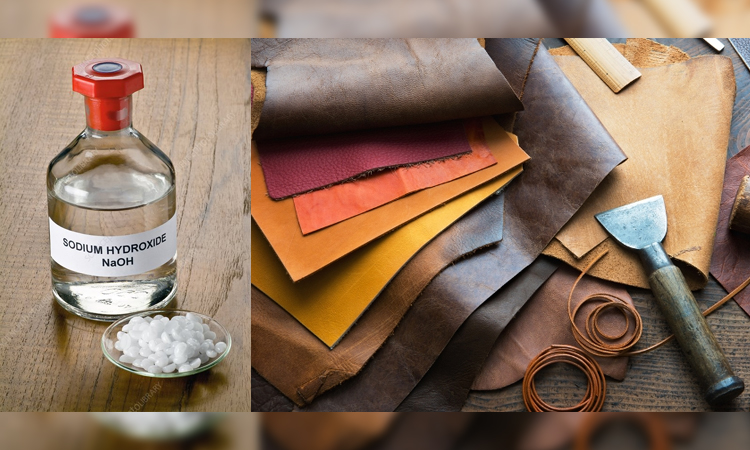
Sodium bicarbonate differs from sodium carbonate, calcium hydroxide, and sodium hydroxide in alkalinity, reactivity, and suitability for specific operations. Calcium hydroxide is widely used in liming, while other alkaline agents serve different functions throughout the tanning process.
Although sodium bicarbonate can increase alkalinity, it is not a direct substitute for these chemicals. Its comparatively mild behavior may be useful when a controlled adjustment is required, but it may be insufficient for processes needing stronger alkalinity or a substantial pH change. Chemical selection should consider the required reaction, processing time, compatibility, and effect on leather properties. Any substitution should be supported by formulation testing rather than based solely on the alkaline characteristics of the chemicals involved.
Sodium Bicarbonate Across the Tanning Process
The role of sodium bicarbonate varies throughout leather production, from the preparation of raw hides to tanning and post-tanning treatments. Identifying its actual function at each stage helps distinguish established applications from uses that are limited, formulation-dependent, or inappropriate.
Soaking, Unhairing, and Liming
Soaking restores moisture to preserved hides and removes dirt, soluble proteins, and other contaminants. Unhairing and liming then remove hair and epidermal material while promoting changes in the hide’s fibrous structure. These operations typically rely on established formulations containing alkaline agents, unhairing chemicals, and other auxiliaries. Sodium bicarbonate is not a primary chemical for these stages, and its addition without a defined technical purpose may complicate process control without providing a demonstrated benefit.
The ability to influence pH does not automatically make a chemical suitable for every alkaline treatment. In liming, for example, the desired structural changes cannot be achieved simply by introducing a mildly alkaline salt.
Deliming and Bating
Deliming reduces alkalinity and removes residual lime after liming, while bating uses enzymes to modify the hide structure. Both operations require pH conditions appropriate to the selected chemicals and enzymes.
Deliming commonly uses ammonium salts, organic acids, carbon dioxide, or other suitable agents. Sodium bicarbonate is not a primary deliming chemical because its alkaline properties do not serve the main purpose of lowering pH. During bating, enzyme activity also depends on the characteristics of the enzyme preparation and the processing conditions. Any use of sodium bicarbonate around these stages must therefore be justified by a specific, validated formulation rather than assumed to be standard practice.
Pickling and Chrome Tanning

Chrome tanning is one of the most relevant applications of sodium bicarbonate in the tanning process. Pickling prepares the hide under acidic conditions that support chromium penetration. The pH is subsequently raised through basification to promote chromium fixation within the collagen structure. Sodium bicarbonate can serve as a basifying agent in suitable chrome-tanning formulations. It supports the required pH adjustment but does not replace the chromium tanning agent itself.
The timing and rate of addition are critical. Chromium salts must penetrate the hide sufficiently before conditions encourage extensive fixation. If pH rises too rapidly, chromium may become fixed preferentially in the outer layers, potentially creating uneven distribution and differences in leather properties.
The appropriate dosage depends on the chromium salt, its basicity, initial pH, hide characteristics, temperature, and required final conditions. The concentration of the tanning bath and the quantity of material being processed must also be considered. No universal dosage applies to every chrome-tanning system.
Manufacturers should monitor pH throughout basification rather than relying exclusively on a predetermined quantity. Consistent mixing and controlled dosing help minimize localized alkalinity changes, supporting more predictable results during the tanning process.
Retanning, Dyeing, and Fatliquoring
After primary tanning, retanning modifies leather fullness and performance, dyeing establishes the required color, and fatliquoring introduces lubricating materials that help maintain flexibility. Sodium bicarbonate may be appropriate in selected neutralization or pH-adjustment procedures, depending on the formulation. However, its use should not be generalized across all retanning, dyeing, or fatliquoring systems. Changes in pH can affect dye uptake, retanning agents, and the distribution of processing auxiliaries.
Compatibility becomes especially important when multiple treatments occur sequentially. A pH adjustment suitable for one operation may be inappropriate for the next. Manufacturers should evaluate the intended function of each auxiliary and determine whether the proposed adjustment could affect its solubility, stability, or interaction with other components. Laboratory trials can establish whether sodium bicarbonate provides a measurable benefit without compromising color consistency, softness, or other product specifications.
Finishing
Finishing includes coating, drying, surface treatment, and the application of materials designed to improve appearance or resistance to wear. Sodium bicarbonate is not a general-purpose finishing chemical. Its relevance to finished leather is primarily associated with chemical processing in earlier stages of the tanning process. Any specialized direct application requires a specific technical justification and evidence that the treatment meets the required product specifications.
Effects on Leather Quality and Processing Efficiency

The effect of sodium bicarbonate on leather quality depends on the processing stage, formulation, and operating conditions. Its value should be assessed through measurable process outcomes rather than assumptions that any pH adjustment will improve the finished material.
- Influence on pH Stability and Chemical Distribution
In suitable applications, controlled basification supports the conditions required for chromium fixation. Conversely, localized pH changes can cause uneven fixation and inconsistent chemical distribution.
Monitoring the tanning bath, maintaining adequate mixing, and following a validated dosing procedure help manufacturers manage these risks. Process consistency also depends on hide thickness, temperature, chemical concentration, and treatment time.
- Potential Effects on Leather Uniformity and Surface Quality
Leather quality depends on hide characteristics, chemical formulation, temperature, mechanical action, and processing time. Sodium bicarbonate may contribute to appropriate processing conditions, but it cannot independently guarantee uniform color, improved grain quality, or greater mechanical strength.
Performance should be evaluated using relevant specifications, including color consistency, surface appearance, softness, and the physical properties required for the intended application. Controlled production trials can determine whether a proposed adjustment improves the existing process.
Dosage, Application Conditions, and Process Limitations
Appropriate dosage and application methods are essential to achieving the intended chemical effect without disrupting other stages. Because leather formulations vary, sodium bicarbonate should be introduced according to validated process requirements rather than a universal dosing recommendation.
Factors Affecting Dosage and Addition Method
Dosage depends on the processing stage, initial and target pH, hide weight, bath composition, and chemicals involved. In chrome tanning, chromium concentration and basicity are particularly important.
Where gradual basification is required, controlled addition and pH monitoring help maintain suitable conditions. Manufacturers evaluating industrial grade sodium bicarbonate should also consider purity, batch consistency, solubility, and technical specifications.
Laboratory trials can help determine an appropriate addition rate and identify incompatibilities before implementation at production scale. The procedure should be validated against the required process conditions and leather-quality criteria.
Risks of Excessive Alkalinity and Incompatible Chemicals
Excessive alkalinity can disrupt tanning reactions, promote premature chromium fixation, or interfere with subsequent dyeing and finishing. An inappropriate addition rate may also create localized differences in the chemical environment, even when the final average pH appears acceptable. Manufacturers should assess both the rate and distribution of chemical addition. Regular pH measurements, adequate mixing, and documented operating procedures help reduce avoidable variability. Any formulation change should be tested under representative production conditions.
Environmental Considerations in Leather Manufacturing

The environmental impact of leather processing depends on chemical consumption, water use, production efficiency, and wastewater treatment. Although sodium bicarbonate is a relatively mild alkaline salt, its use does not automatically make a tanning formulation more environmentally sustainable.
Its addition can affect wastewater composition, dissolved solids, and the amount of chemicals needed for pH adjustment. Chrome-tanning operations also require appropriate management of chromium-containing wastewater, including suitable treatment and recovery measures where applicable.
Environmental benefits should be demonstrated through measurable results, including chemical consumption, wastewater characteristics, water requirements, and overall process performance. Reducing the use of one chemical does not necessarily reduce the total environmental impact if other inputs or treatment requirements increase.
Selecting Sodium Bicarbonate for Industrial Leather Processing
Selecting a suitable supplier helps manufacturers maintain consistent material specifications and reliable production schedules. Product purity, batch consistency, technical documentation, packaging, storage requirements, and supply reliability should all be evaluated before purchasing sodium bicarbonate for industrial applications.
Different industries have distinct technical requirements. For example, sodium bicarbonate in textile industry applications may involve different processing objectives and compatibility considerations from those encountered in leather tanning. Product selection should therefore reflect the specific requirements of each operation. For industrial buyers, Pars Baking Soda Group is a relevant point of reference when evaluating sodium bicarbonate supply options. Buyers should verify the available grade, technical specifications, and suitability for their intended application before purchase.
Conclusion
Sodium bicarbonate has a limited but useful role in the leather industry. Its most relevant application is in selected chrome-tanning formulations, where it supports controlled basification and chromium fixation. It may also be used in certain neutralization or pH-adjustment procedures, depending on the formulation. Across the tanning process, it is not a universal treatment or a substitute for primary chemicals used in liming, deliming, or tanning. Appropriate application requires validated formulations, controlled dosing, and compatibility assessment. These measures help manufacturers maintain consistent leather quality while managing chemical consumption and wastewater characteristics.
Frequently Asked Questions
Sodium bicarbonate can adjust pH or support controlled basification in selected leather-processing operations. Its most relevant application is in certain chrome-tanning formulations, where a gradual pH increase promotes chromium fixation.
No. These chemicals have different properties and functions. Substitution requires a technically validated formulation and assessment of its effects on processing performance.
Dosage depends on the processing stage, initial and target pH, hide weight, bath composition, chromium concentration and basicity where relevant, temperature, and the required rate of pH change. Manufacturers should follow validated process instructions rather than a universal dosage recommendation