



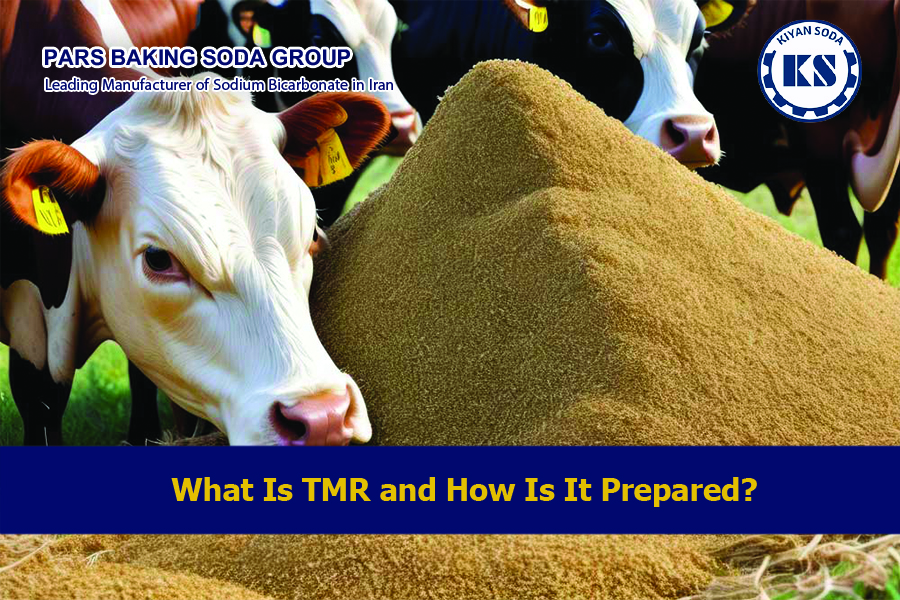
Feeding dairy cows with a balanced diet is one of the most important factors affecting milk production, rumen health, and overall herd performance. However, providing the right nutrients is not only about choosing high-quality feed ingredients. The way those ingredients are combined and delivered to cows also plays an important role. Total Mixed Ration (TMR) is a feeding system in which forage, concentrates, protein sources, minerals, vitamins, and other feed additives are combined into one uniform mixture. Instead of offering individual ingredients separately, cows receive a consistent mixture designed to provide the nutrients they need throughout the day. A properly prepared TMR can help reduce selective feeding, improve nutrient intake, and support more stable rumen conditions. For this reason, understanding what TMR is and how to prepare it correctly is essential for dairy farmers looking to improve feed efficiency and herd performance.
What Is Total Mixed Ration (TMR)?
A Total Mixed Ration (TMR) is a complete feed mixture that combines all or most of the ingredients required by dairy cows into a single ration. Depending on the production stage of the animals, the mixture may contain forage, grains, protein supplements, minerals, vitamins, and specific feed additives.
The main principle behind TMR is consistency. Each mouthful of the ration should contain a similar proportion of the nutrients included in the formulated diet. This allows cows to consume a more predictable combination of fiber, energy, protein, and minerals rather than selecting individual ingredients.
TMR is commonly prepared using a mixer wagon or other mechanical mixing equipment. The ingredients are weighed according to the formulated ration and then mixed until they are distributed evenly. This approach is particularly useful in dairy herds because nutritional requirements can vary significantly between dry cows, fresh cows, and cows at different stages of lactation. Separate rations can therefore be prepared for different groups according to their nutritional needs.
Why Is TMR Important for Dairy Cows?

The value of TMR goes beyond simply combining feed ingredients. A well-designed and consistently mixed ration can influence feed intake, nutrient utilization, rumen function, and overall herd performance.
1. Consistent Nutrient Intake
One of the main advantages of TMR is that it helps provide a consistent supply of nutrients. When cows are offered individual ingredients separately, they may consume some components in larger amounts and leave others behind.
A uniform mixture makes it more difficult for cows to selectively consume only the most palatable ingredients. As a result, nutrient intake is more closely aligned with the formulated diet. Consistency is especially important for high-producing dairy cows, whose nutritional requirements are relatively high and whose performance can be affected by changes in nutrient intake.
2. Improved Feed Efficiency
A properly formulated TMR can help cows use dietary nutrients more efficiently. By combining forage and concentrate ingredients in appropriate proportions, the ration can provide a suitable balance of energy, protein, and fiber.
Better consistency in feed intake may also help reduce unnecessary feed waste. When the ration is mixed correctly and delivered uniformly, cows have greater access to a similar nutritional profile throughout the feeding period.
3. Better Rumen Health and Stable pH
Rumen health is closely connected to the balance between fermentable carbohydrates and physically effective fiber in the diet. Excessive intake of rapidly fermentable carbohydrates can contribute to a decline in rumen pH. A properly formulated TMR distributes concentrates and forage throughout the mixture and can therefore help maintain a more consistent nutrient supply to the rumen.
Feed additives such as sodium bicarbonate may also be included when appropriate. As a buffering agent, sodium bicarbonate can contribute to rumen pH management in certain dairy diets, particularly when cows receive diets with relatively high levels of fermentable carbohydrates.
What Are the Main Components of a TMR?
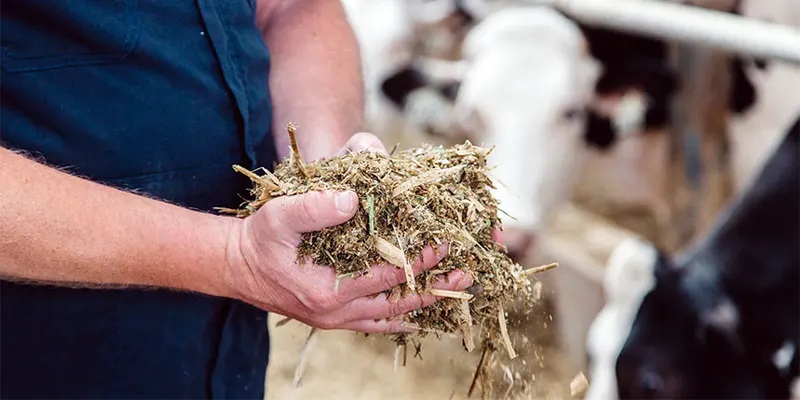
The exact composition of a Total Mixed Ration depends on the animal’s production stage, nutritional requirements, forage quality, available ingredients, and the overall feeding strategy of the farm.
Common components include:
- Forages: Such as corn silage, grass silage, hay, or other roughages. These provide fiber and contribute to normal rumen function.
- Concentrates: Grains and other energy-rich ingredients provide additional energy required for maintenance and milk production.
- Protein sources: Ingredients such as soybean meal and other protein supplements help meet the cow’s protein requirements.
- Minerals and vitamins: These are added according to the nutritional requirements of the herd and the composition of the base ingredients.
- Feed additives: Depending on the ration and management goals, different additives may be included to support feed stability, rumen function, or other nutritional objectives.
The proportions of these ingredients should be determined through proper ration formulation rather than by using a fixed recipe for every herd.
How Is a TMR Prepared? A Step-by-Step Guide
Preparing a high-quality TMR requires more than putting ingredients into a mixer and turning it on. Accurate weighing, appropriate loading order, sufficient mixing, and regular quality control are all important.
1. Analyze the Feed Ingredients
The first step is understanding the nutritional characteristics of the available ingredients. Forages should be evaluated for factors such as dry matter, fiber, protein, and energy content. This is important because the nutritional value of forage can vary considerably depending on harvest conditions, maturity, moisture content, and storage.
Dry matter is particularly important when preparing a ration. If the moisture content of an ingredient changes but the amount added to the mixer remains the same, the actual amount of nutrients delivered to the cows can also change.
2. Formulate the Ration
Once the ingredients have been evaluated, the ration can be formulated according to the nutritional requirements of the target group of cows. The formulation should consider factors such as milk production, body weight, stage of lactation, dry matter intake, forage quality, and the availability of nutrients from different feed ingredients.
A qualified animal nutritionist can help determine the appropriate proportions of forage, concentrates, protein sources, minerals, vitamins, and feed additives.
3. Load Ingredients in the Correct Order
The order in which ingredients are loaded into the mixer can affect the quality and consistency of the final mixture. The appropriate loading sequence depends on the type of mixer and the physical characteristics of the ingredients. Farmers should follow the equipment manufacturer’s recommendations and the feeding protocol established for the farm.
Very fine ingredients and small quantities of additives require particular attention because they can become unevenly distributed if they are added incorrectly.
4. Mix the Ingredients Thoroughly

After the ingredients have been loaded, they should be mixed for an appropriate amount of time. Under-mixing can leave pockets of individual ingredients, while excessive mixing may negatively affect particle size in some situations.
The objective is to produce a uniform mixture in which the ingredients are distributed consistently without unnecessarily damaging the physical structure of the forage.
The correct mixing time depends on the equipment, ingredient characteristics, and ration composition. Farmers should follow the mixer manufacturer’s recommendations and monitor the consistency of the finished feed.
5. Check TMR Quality and Consistency
Quality control is an essential part of TMR management. A ration may be correctly formulated on paper but still fail to deliver the intended nutrients if mixing or feeding practices are inconsistent. Farmers can regularly inspect the mixture for visible separation and use practical methods such as particle-size evaluation to monitor uniformity.
Changes in dry matter, ingredient quality, sorting behavior, or mixer performance should also be monitored. Regular checks make it easier to identify problems before they affect herd performance.
6. Deliver the TMR to the Cows
The final step is delivering the mixture consistently to the appropriate group of cows. Feed should be distributed evenly along the feeding area so that all animals have reasonable access to the ration. The timing and frequency of feeding should also be consistent with the farm’s feeding management program.
After delivery, farmers should monitor feed refusals and observe whether cows are sorting the ration. Excessive sorting can cause animals to consume a diet that differs from the formulated ration.
The Role of Sodium Bicarbonate in TMR
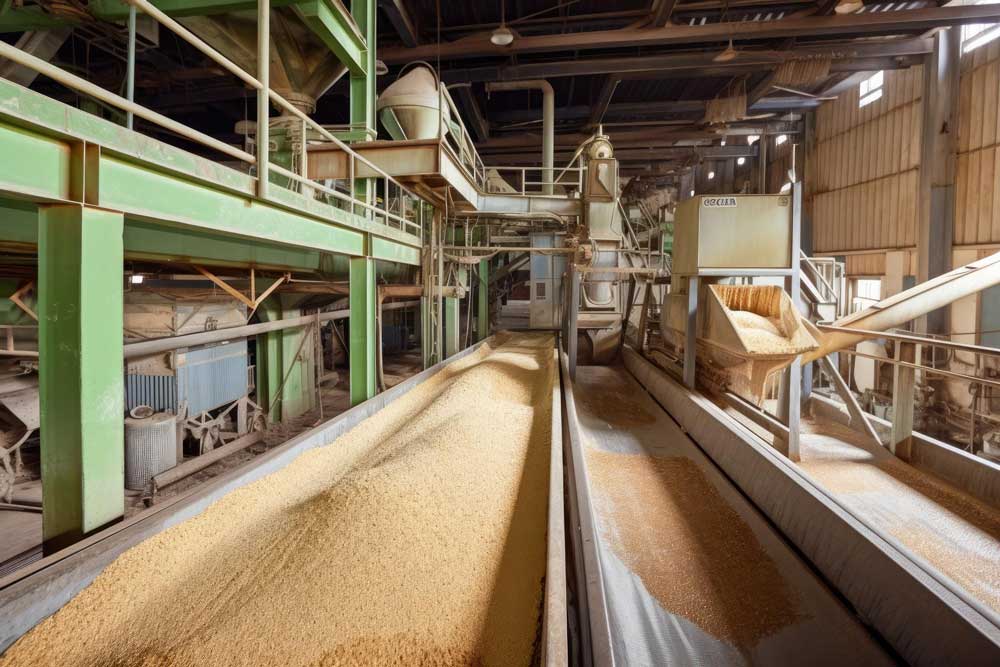
Sodium bicarbonate is one of the feed additives that may be included in dairy cow diets when appropriate. Its primary nutritional role is related to its buffering capacity. In the rumen, microbial fermentation produces volatile fatty acids and other fermentation products. When diets contain substantial amounts of rapidly fermentable carbohydrates, the risk of a lower rumen pH may increase.
Sodium bicarbonate can contribute to the buffering capacity of the rumen environment and may be considered as part of nutritional strategies designed to support rumen pH.
However, it should not be viewed as a replacement for proper ration formulation. Adequate physically effective fiber, appropriate carbohydrate levels, good forage quality, and consistent feeding management remain fundamental to rumen health. The amount and inclusion method should therefore be determined according to the complete ration and the nutritional objectives of the herd.
How to Choose the Right Sodium Bicarbonate for Dairy Cow TMR?
When sodium bicarbonate is included in a dairy cow TMR, choosing a product that is specifically suitable for animal feed applications is important. Product quality, consistency, purity, and appropriate specifications are among the factors that should be considered when selecting sodium bicarbonate for dairy cattle nutrition.
Understanding Sodium Bicarbonate Grades
Sodium bicarbonate is available in different grades for different applications. Understanding Sodium Bicarbonate grades helps dairy farmers and feed manufacturers distinguish between products intended for animal feed, food processing, industrial applications, and other uses.
For dairy cattle diets, the focus should be on a product that is specifically manufactured and specified for animal feed applications. Factors such as purity, consistency, particle characteristics, quality specifications, and proper storage should be considered when evaluating a product.
Choosing the appropriate grade is important because sodium bicarbonate used in a TMR should meet the quality and specifications required for its intended application. Farmers should therefore avoid selecting a product based solely on price or general availability.
Why Feed Grade Sodium Bicarbonate Matters
Feed Grade Sodium Bicarbonate is specifically intended for use in animal nutrition and is therefore the appropriate grade to consider when sodium bicarbonate is incorporated into dairy cattle feed.
Using a suitable feed-grade product helps ensure that the additive meets the quality and safety specifications required for its intended application. Dairy farmers and feed manufacturers should also review product specifications, quality documentation, storage conditions, and recommended handling practices before incorporating sodium bicarbonate into a ration.
The objective is not simply to add sodium bicarbonate to the TMR, but to use a consistent and suitable product as part of a properly formulated feeding program. Its inclusion should be considered alongside the overall nutrient composition of the ration, forage quality, carbohydrate levels, and other factors that influence rumen health.
Choosing a Reliable Sodium Bicarbonate Manufacturer
The supplier can also play an important role in maintaining consistent feed quality. Working with a reliable sodium bicarbonate manufacturer can provide access to product specifications, quality documentation, and information about product consistency and handling.
When purchasing sodium bicarbonate for dairy feed applications, buyers should consider factors such as product quality, consistency between batches, traceability, packaging, storage requirements, and the manufacturer’s ability to meet feed-industry requirements.
A reliable supply of consistent-quality sodium bicarbonate can make feed formulation and TMR preparation more predictable. However, the final inclusion rate and use of the product should always be determined according to the complete ration and the nutritional requirements of the dairy herd.
Common Mistakes When Preparing TMR

Even when a ration has been properly formulated, management mistakes can reduce its effectiveness. Some common problems include:
- Using inaccurate ingredient weights
- Failing to account for changes in dry matter
- Loading ingredients in an unsuitable order
- Mixing for too little or too much time
- Allowing excessive variation in particle size
- Adding small amounts of additives without adequate distribution
- Failing to monitor feed sorting
- Allowing inconsistent feeding times
- Ignoring changes in forage quality
- Not checking mixer performance regularly
Another common mistake is assuming that a ration that looks uniform is necessarily nutritionally consistent. Regular monitoring and appropriate quality-control procedures are needed to ensure that the final feed remains close to the formulated diet.
How to Maintain TMR Quality on the Farm
Maintaining the quality of a Total Mixed Ration requires consistent management after the mixing process as well. Farmers should regularly monitor forage moisture, ingredient quality, mixing equipment, feed refusals, and sorting behavior. Mixer scales should also be checked periodically to make sure ingredients are being added at the intended amounts.
Storage conditions are equally important. Forages and other ingredients should be protected from moisture, contamination, spoilage, and environmental conditions that may reduce their quality. The physical characteristics of the ration should also remain relatively consistent from one feeding to the next. Sudden changes in particle size, moisture, or ingredient proportions can affect how cows consume and utilize the diet.
Ultimately, successful TMR management depends on consistency. The ration formulated by the nutritionist should closely match the ration actually mixed and delivered to the cows.
Conclusion
A well-prepared TMR is an effective way to provide dairy cows with a consistent combination of forage, concentrates, protein, minerals, vitamins, and appropriate feed additives. By reducing selective feeding and improving the consistency of nutrient intake, TMR can support feed efficiency and rumen health.
However, the success of a TMR program depends on more than the formulation itself. Accurate ingredient measurement, correct loading, thorough mixing, regular quality checks, and consistent delivery are all essential.
When sodium bicarbonate is included in the diet, it should be selected and used appropriately as part of the overall nutritional strategy. Choosing a suitable feed-grade product and maintaining consistent feeding practices can help dairy farmers achieve better control over ration quality and herd nutrition.