


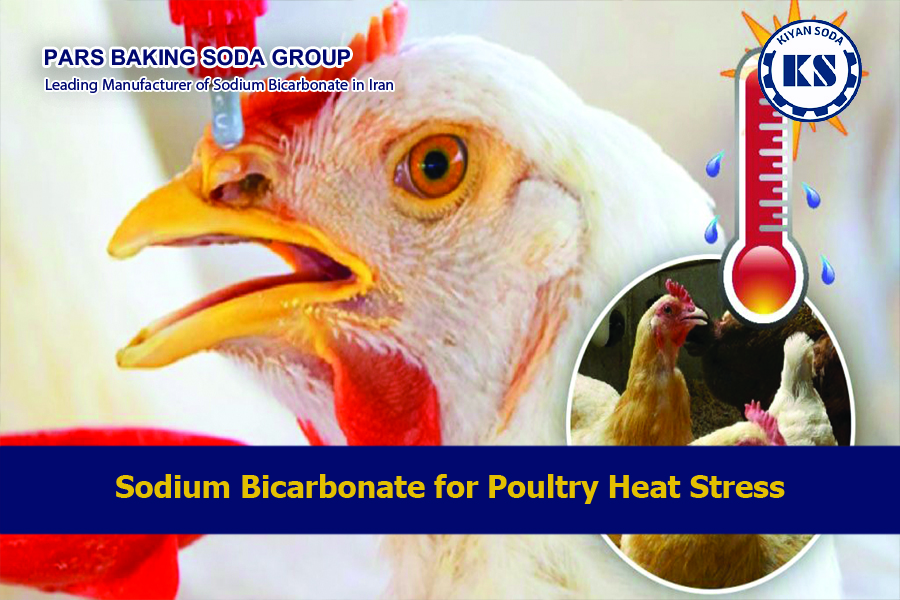
Heat stress is a major environmental challenge in poultry production, particularly in regions where birds are exposed to prolonged periods of high temperature and humidity. Because poultry have limited ability to dissipate body heat, elevated temperatures can increase panting, reduce feed intake, disturb acid–base balance, and negatively affect growth, feed efficiency, egg production, and eggshell quality. These effects make nutritional strategies an important part of heat-stress management. Sodium bicarbonate is one of the electrolyte sources used in poultry nutrition during periods of high environmental temperature. Its supply of sodium and bicarbonate can contribute to maintaining acid–base and electrolyte balance when heat stress alters normal physiological regulation. Research on heat stress poultry has shown that appropriate electrolyte supplementation may help reduce some of the performance losses associated with thermal stress, although responses depend on diet composition, environmental conditions, and production stage.
Heat Stress in Poultry and Its Effects on Birds
Understanding the physiological changes associated with heat stress poultry is essential for evaluating the potential role of sodium bicarbonate. High temperatures affect more than body temperature; they also influence respiratory function, water balance, mineral metabolism, and nutrient utilization.
1. Physiological Response to Heat Stress
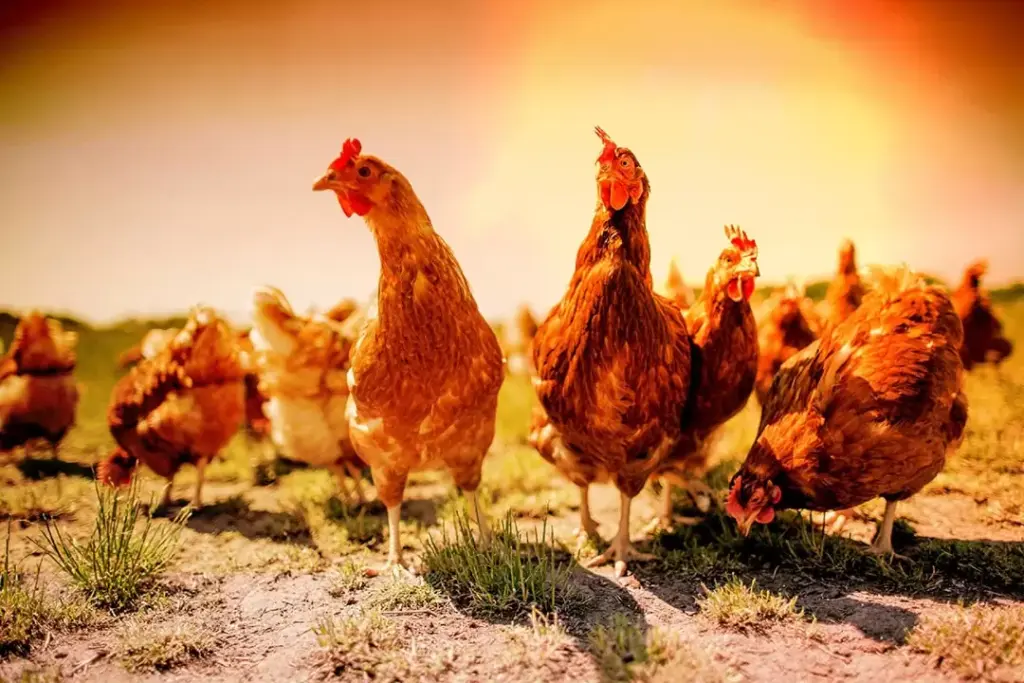
When exposed to high temperatures, poultry increase their respiratory rate and begin panting to promote evaporative cooling. Panting increases the loss of carbon dioxide through respiration and can shift blood acid–base status toward respiratory alkalosis. At the same time, prolonged heat exposure can alter sodium, potassium, chloride, and bicarbonate regulation.
These changes place additional physiological demands on birds. Energy that would normally support growth, maintenance, reproduction, or other productive functions may instead be directed toward thermoregulation. The severity of the response depends on factors such as temperature, relative humidity, duration of exposure, bird age, stocking density, ventilation, and production stage.
2. Effects on Feed Intake and Performance
One of the most consistent consequences of heat stress is a reduction in feed intake. Birds reduce voluntary feed consumption as environmental temperature rises, which can limit the intake of energy, amino acids, minerals, and other nutrients required for production.
Prolonged exposure can therefore reduce body weight gain and feed efficiency in broilers and negatively affect productivity in laying hens. The relationship between heat stress poultry and performance is therefore multifactorial. Reduced feed intake is only one component; dehydration, oxidative stress, altered blood chemistry, electrolyte losses, and changes in nutrient metabolism can also contribute to poorer production outcomes.
3. Acid–Base and Electrolyte Imbalance
Panting-related carbon dioxide loss is particularly important because it disrupts the normal acid–base equilibrium. Heat-stressed birds may also experience changes in sodium and potassium losses, while inadequate water availability can further aggravate dehydration and electrolyte disturbances.
For this reason, electrolyte management is an important nutritional consideration in heat stress poultry. Sodium bicarbonate provides both sodium and bicarbonate ions and can therefore be incorporated into a broader dietary electrolyte strategy.
How Sodium Bicarbonate Supports Heat-Stressed Poultry
Sodium bicarbonate does not eliminate the environmental cause of heat stress. Instead, its nutritional role is primarily associated with the regulation of acid–base and electrolyte balance. The practical response depends on the overall dietary formulation rather than on sodium bicarbonate alone.
Role in Acid–Base and Electrolyte Balance
During heat stress, increased panting changes carbon dioxide excretion and disrupts normal acid–base regulation. Sodium bicarbonate supplies bicarbonate, which participates in the body’s buffering system, as well as sodium, an essential extracellular electrolyte. Research has identified sodium bicarbonate as one of the electrolyte sources that can be used to help address heat-related acid–base disturbances in poultry.
This does not mean that increasing sodium bicarbonate indefinitely will produce better results. Excessive or poorly balanced electrolyte supplementation can itself disturb mineral and acid–base homeostasis. Sodium bicarbonate should therefore be evaluated in relation to dietary sodium, potassium, chloride, and the overall dietary electrolyte balance. The potential role of sodium bicarbonate is particularly relevant when considering heat stress poultry, because heat exposure can increase the physiological importance of maintaining adequate electrolyte availability.
Support for Water Intake and Hydration
Water is fundamental to thermoregulation in poultry. During hot conditions, birds increase water consumption as part of evaporative cooling and fluid regulation. If water availability is restricted or inadequate, heat stress can become more severe.
Electrolyte management can support fluid and mineral balance, but sodium bicarbonate should not be considered a substitute for continuous access to clean, cool drinking water. Effective heat-stress management requires adequate water supply, appropriate ventilation, environmental control, and a nutritionally balanced diet alongside any electrolyte supplementation.
Benefits of Sodium Bicarbonate in Poultry Feed
The potential benefits of sodium bicarbonate become most relevant when it is incorporated into an appropriately formulated diet. Research has reported responses in different poultry categories, but the magnitude and direction of these effects are not necessarily consistent across all studies.
- Feed Intake and Feed Efficiency
Heat stress commonly reduces feed intake and can impair feed efficiency. By contributing to acid–base and electrolyte regulation, sodium bicarbonate may help support physiological stability during periods of high environmental temperature. Some studies have reported improved performance or feed conversion in heat-stressed broilers receiving sodium bicarbonate, although results depend on the dietary and environmental conditions.
Therefore, the role of sodium bicarbonate in heat stress poultry should be viewed as supportive rather than as a direct feed-efficiency enhancer under all conditions. Maintaining adequate nutrient density and managing environmental stress remain essential.
- Growth Performance and Survival
Heat stress can reduce growth performance in broilers and, when severe or prolonged, increase the risk of mortality. Electrolyte supplementation, including sodium bicarbonate, has been investigated as one nutritional approach to reduce some of the physiological consequences of heat exposure. Studies have reported improved performance under certain heat-stress conditions when sodium bicarbonate was included in broiler diets.
However, survival cannot be attributed to sodium bicarbonate alone. Temperature control, ventilation, water availability, stocking density, disease prevention, and overall flock management have a major influence on mortality. Sodium bicarbonate should therefore be considered one component of a broader strategy for managing heat stress poultry.
- Egg Production and Eggshell Quality
Laying hens are particularly sensitive to the effects of heat stress on eggshell formation. Panting-induced respiratory alkalosis can reduce the availability of ionized calcium and disrupt the conditions required for normal calcium carbonate deposition in the eggshell. Consequently, high temperatures may reduce shell strength and other measures of egg quality.
Dietary sodium bicarbonate has been investigated as a way to provide additional bicarbonate under these conditions. Experimental studies have reported improvements in eggshell strength or quality in heat-stressed laying hens receiving sodium bicarbonate, although responses can vary with feeding conditions and other aspects of the diet. Importantly, sodium bicarbonate does not guarantee higher egg production. Some studies have reported improvements in shell quality or feed conversion without a corresponding increase in laying rate. Therefore, the expected outcome should be defined according to the production objective and the specific conditions of the flock.
Factors Affecting the Effectiveness of Sodium Bicarbonate
The response to sodium bicarbonate depends on more than the amount added to feed. Dietary electrolyte balance, mineral supply, heat intensity, bird type, water availability, and feeding management can all influence the final response.
- Electrolyte Balance and Sodium Supply
Sodium bicarbonate contributes sodium as well as bicarbonate, so its inclusion changes the overall electrolyte profile of the diet. Dietary electrolyte balance is commonly considered in relation to sodium, potassium, and chloride. Heat stress can alter the requirements for and losses of these electrolytes, making the complete mineral profile more important than any single ingredient. For this reason, sodium bicarbonate should be formulated as part of the complete ration rather than added without considering existing sodium and chloride sources.
- Diet Composition and Feeding Management
The composition of the basal diet can influence the response to sodium bicarbonate. Sodium content, chloride concentration, potassium supply, mineral sources, dietary nutrient density, and the availability of feed during periods of heat all need to be considered. Feeding management is also important. During severe heat, reduced feed intake can limit nutrient and mineral consumption even when the formulated diet meets nutritional specifications. Adjustments to feeding times, feed accessibility, water availability, and environmental management may therefore complement nutritional strategies.
- Heat Stress Severity
The physiological response to heat depends on both temperature and humidity, as well as exposure duration. Acute heat exposure and prolonged chronic heat stress may produce different effects on feed intake, acid–base balance, electrolyte status, and production. As a result, recommendations developed for one heat-stress condition should not automatically be applied to every flock. The nutritional strategy for heat stress poultry should consider bird age, genetic strain, production stage, environmental conditions, and the severity and duration of heat exposure.
Heat stress should also be distinguished from infectious diseases that may produce overlapping signs such as reduced activity or production. Conditions such as avian influenza require appropriate veterinary assessment and should not be attributed to environmental temperature alone. Heat-management principles also vary among livestock species. For example, strategies discussed in relation to heat stress in cows cannot simply be transferred to poultry because poultry have different thermoregulatory mechanisms, dietary requirements, and electrolyte physiology.
- Quality and Selection of Sodium Bicarbonate for Poultry Feed
When sodium bicarbonate is intended for poultry nutrition, product quality and suitability for feed use are important considerations. A consistent product should meet the relevant specifications for its intended application, with appropriate control of purity, physical characteristics, and contaminants. For manufacturers and poultry nutrition professionals, selecting a product described as feed grade suitable for poultry can help ensure that the material is intended for incorporation into poultry feed and is aligned with feed-quality requirements.
The appropriate inclusion level should be determined according to the complete diet and the nutritional objectives of the flock rather than by using a universal dose. Changes in sodium bicarbonate inclusion can alter sodium and dietary electrolyte balance, so formulation should account for all mineral sources in the ration.
Conclusion
Heat stress can disrupt feed intake, hydration, acid–base regulation, electrolyte balance, growth, feed efficiency, egg production, and eggshell quality in poultry. These effects are closely associated with the physiological response to high environmental temperatures, particularly increased panting and changes in carbon dioxide loss.
Sodium bicarbonate can play a useful nutritional role in managing some of these challenges because it supplies both sodium and bicarbonate. Research indicates potential benefits for performance in heat-stressed broilers and for eggshell quality in laying hens under certain conditions. However, responses are influenced by diet composition, electrolyte balance, environmental severity, bird type, and feeding management.
For this reason, sodium bicarbonate should be viewed as one component of an integrated strategy for heat stress poultry, alongside adequate water, ventilation, environmental control, appropriate stocking density, and balanced nutrition.
Frequently Asked Questions
Sodium bicarbonate supplies sodium and bicarbonate, which contribute to electrolyte and acid–base regulation. During heat stress, increased panting can disturb these systems, so appropriate dietary electrolyte management may help support physiological stability.
Some studies have reported improved feed conversion or performance in heat-stressed broilers receiving sodium bicarbonate. However, the response is not universal and depends on diet composition, electrolyte balance, environmental conditions, and the severity of heat stress.
Research has reported improvements in eggshell strength and quality under certain high-temperature conditions. The effect is associated with the role of bicarbonate in acid–base regulation and eggshell mineralization, but the response can vary with feeding conditions and overall diet formulation.
Sodium bicarbonate should be incorporated according to the complete dietary formulation, considering sodium, potassium, chloride, dietary electrolyte balance, bird type, production stage, and environmental conditions. A fixed inclusion level should not be applied without evaluating the rest of the diet.