
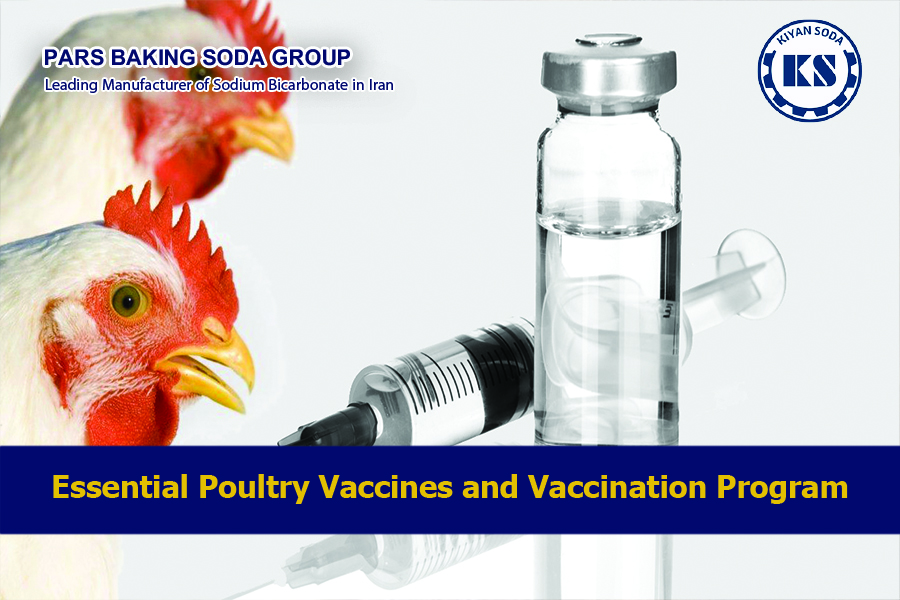

Poultry vaccination is one of the most important tools for preventing infectious diseases and maintaining flock health. A well-designed poultry vaccination program can reduce disease losses, improve production stability, and support better flock performance. However, vaccination alone is not enough. Nutrition, biosecurity, environmental management, water quality, and stress control all influence the health status of poultry and their ability to respond normally to vaccination. This guide explains the most important poultry vaccines, provides example vaccination programs for broilers and layers, and examines how balanced nutrition—including Feed Grade Sodium Bicarbonate Suitable for Poultry—can support overall flock health.
Why Vaccination Matters in Poultry Production
Commercial poultry are raised at relatively high stocking densities, which can increase the risk of infectious disease transmission. Vaccination helps prepare the immune system to recognize specific pathogens and respond more effectively when birds are exposed. An effective vaccination strategy can help:
- Reduce the incidence and severity of important infectious diseases
- Limit production losses associated with disease outbreaks
- Improve flock health and production consistency
- Reduce mortality and economic losses
- Support more predictable production in broilers and layers
However, vaccination programs should be adapted to the farm’s disease history, geographic location, production system, maternal antibody levels, and local veterinary recommendations. There is no single vaccination schedule that is appropriate for every poultry operation.
Essential Poultry Vaccines for Major Diseases
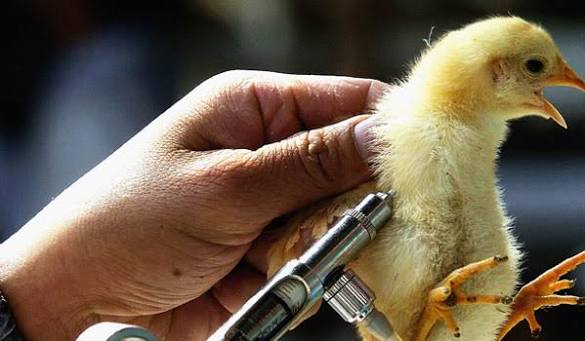
Several vaccines are commonly included in commercial poultry health programs. Their use and timing vary according to regional disease pressure and farm-specific risks.
- Newcastle Disease
Newcastle disease is a highly contagious viral disease that can cause respiratory, digestive, nervous, and production problems. Vaccination is widely used in commercial poultry production, particularly in areas where Newcastle disease represents a significant risk.
Live vaccines may be administered through drinking water or spray, while inactivated vaccines may be used in specific production programs, particularly for breeders and layers.
- Avian Influenza
Avian influenza is an important viral disease affecting poultry health and the poultry industry. Vaccination policies for avian influenza vary considerably between countries and may depend on national regulations, circulating strains, outbreak status, and the type of vaccine authorized for use. Therefore, avian influenza vaccination should always follow local regulatory requirements and veterinary guidance rather than a universal schedule.
- Infectious Bronchitis
Infectious bronchitis is caused by infectious bronchitis virus and primarily affects the respiratory system. Some strains can also affect the kidneys or reproductive tract. Vaccination programs may include live vaccines, inactivated vaccines, or combinations of both. Vaccine selection should consider the strains circulating in the region and the protection required by the flock.
- Infectious Bursal Disease (Gumboro)
Infectious bursal disease affects the bursa of Fabricius and can compromise immune function, particularly in young chickens.
The timing and type of IBD vaccination are strongly influenced by maternal antibody levels and local disease pressure. Using an appropriate vaccine at the correct age is therefore more important than following a fixed schedule for every flock.
- Marek’s Disease
Marek’s disease is a herpesvirus infection associated with tumors, nerve damage, and immunosuppression. Vaccination is commonly performed at the hatchery, usually on the day of hatch, because early protection is important.
- Fowl Pox and Fowl Cholera
Fowl pox vaccination may be considered in areas where the disease is prevalent, particularly for longer-lived birds such as layers and breeders. Fowl cholera, caused by Pasteurella multocida, is generally managed through a combination of biosecurity, hygiene, flock management, and, where appropriate, vaccination.
Example Poultry Vaccination Programs for Broilers and Layers
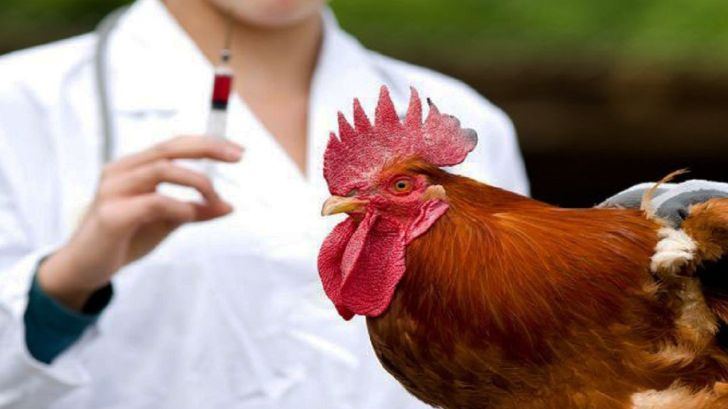
Vaccination schedules should be considered examples rather than universal recommendations. Actual programs should be developed according to local disease risks, vaccine products, maternal antibodies, farm history, and veterinary advice.
Example Poultry Vaccination Program for Broilers
| Age | Disease | Possible Vaccine/Method |
| Day 1 | Marek’s disease | Hatchery vaccination |
| Day 7-10 | Newcastle disease / Infectious bronchitis | Live vaccine through spray or drinking water |
| Day 14-21 | Infectious bursal disease | Live IBD vaccine, depending on maternal antibodies |
| Day 21-28 | Newcastle disease / Infectious bronchitis | Booster, where required |
The exact timing can change according to disease pressure and the immunity provided by the breeder flock.
Example Poultry Vaccination Program for Commercial Layers
| Age | Disease | Possible Vaccine/Method |
| Day 1 | Marek’s disease | Hatchery vaccination |
| 1-3 weeks | Newcastle disease / Infectious bronchitis | Live vaccines |
| 2-4 weeks | Infectious bursal disease | According to maternal antibody levels |
| 6-8 weeks | Newcastle disease / Infectious bronchitis | Booster |
| 8-12 weeks | Fowl pox, where required | Wing-web vaccination |
| 12-18 weeks | Newcastle disease and other required vaccines | Pre-lay vaccination program |
| During lay | Selected vaccines | Boosters, according to local program |
The final poultry vaccination program should be reviewed with a poultry veterinarian and adjusted according to flock monitoring and regional disease conditions.
Critical Considerations for Effective Vaccination
Vaccination works best when birds are healthy and vaccines are handled and administered correctly.
- Vaccinate Healthy Birds
Underlying disease, poor nutrition, heat stress, dehydration, and other management problems can affect flock condition and may interfere with an optimal immune response.
- Handle Vaccines Correctly
Vaccines should be stored, transported, mixed, and administered according to the manufacturer’s instructions. Incorrect temperature, poor storage, inappropriate mixing, or inadequate administration can reduce the effectiveness of a vaccination program.
- Manage Drinking Water Before Oral Vaccination
When vaccines are delivered through drinking water, water quality and sanitation become particularly important. Disinfectants or other substances in the water may interfere with live vaccines, depending on the product. Following the vaccine manufacturer’s instructions is essential.
- Monitor Immunity
Where appropriate, serological monitoring can help veterinarians evaluate flock immunity and determine whether a vaccination program is providing the expected level of protection.
- Adapt the Program to the Production System
Broilers, layers, breeders, and free-range birds can face different disease risks. Therefore, their vaccination programs should not necessarily be identical.
How Nutrition Supports Vaccination and Immune Function
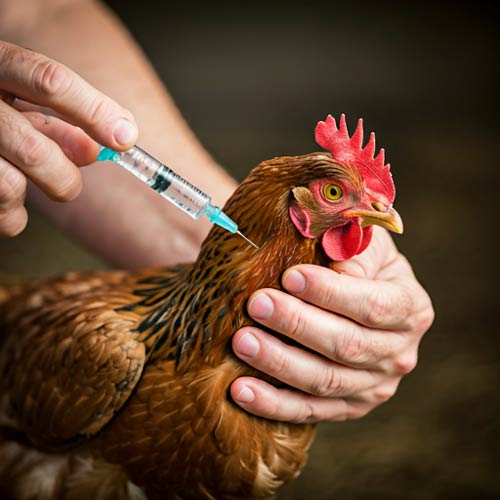
Vaccination is only one part of maintaining flock health. Birds require adequate energy, protein, amino acids, vitamins, minerals, water, and electrolytes to maintain normal physiological and immune functions. The relationship between nutrition and vaccination should therefore be viewed as supportive rather than direct. Nutrition does not replace vaccination, and individual feed ingredients should not be described as vaccine boosters unless specific evidence supports such a claim.
The Role of Electrolyte and Acid-Base Balance
Heat stress is particularly important in this context. During high temperatures, birds increase panting to dissipate heat. Prolonged panting can disturb acid–base balance and contribute to respiratory alkalosis. Electrolytes such as sodium, potassium, chloride, and bicarbonate can be used as part of nutritional strategies designed to maintain electrolyte and acid–base balance during heat stress.
How Sodium Bicarbonate Relates to Vaccination
Sodium bicarbonate provides sodium and bicarbonate and can contribute to dietary electrolyte balance when properly incorporated into a complete poultry diet. Its relevance becomes particularly important during periods of heat stress, when panting and changes in water and electrolyte metabolism can challenge normal physiological balance. Research has shown that dietary electrolyte management, including the appropriate use of sodium bicarbonate, can influence physiological responses and performance under heat stress.
The connection with vaccination is therefore indirect. Sodium bicarbonate does not replace vaccines and should not be presented as a direct enhancer of vaccine efficacy. Instead, it can be part of an overall nutritional and heat-stress management strategy that helps maintain normal physiological conditions.
This distinction is important because a flock’s immune response depends on multiple factors, including health status, nutrition, stress level, maternal antibodies, vaccine quality, administration technique, and environmental conditions. For this reason, a successful poultry vaccination program should be integrated with balanced nutrition, adequate water availability, biosecurity, environmental management, and regular flock monitoring.
Additional Nutritional Benefits of Feed Grade Sodium Bicarbonate
When appropriately formulated, Feed Grade Sodium Bicarbonate Suitable for Poultry can provide nutritional benefits beyond its role as a source of sodium and bicarbonate.
- Supporting Electrolyte Balance
Sodium bicarbonate can contribute to dietary electrolyte balance and acid–base regulation. Its inclusion should always be considered alongside the complete dietary levels of sodium, potassium, and chloride rather than in isolation.
- Supporting Broiler Performance During Heat Stress
Heat stress can negatively affect feed intake, growth, feed efficiency, and physiological stability. Research indicates that appropriate electrolyte management, including sodium bicarbonate supplementation in certain diets, may help alleviate some of these effects.
- Supporting Eggshell Quality
For laying hens, sodium bicarbonate can also contribute to mineral and electrolyte management. Some studies have reported improvements in eggshell quality when sodium bicarbonate is appropriately incorporated into diets under heat-stress conditions.
- Helping Manage Heat Stress
During hot weather, maintaining adequate water intake and electrolyte balance is an important part of heat-stress management. Sodium bicarbonate can be one component of this nutritional strategy, but its use should be based on the overall formulation of the diet and the flock’s physiological requirements.
Choosing Quality Sodium Bicarbonate for Poultry Nutrition
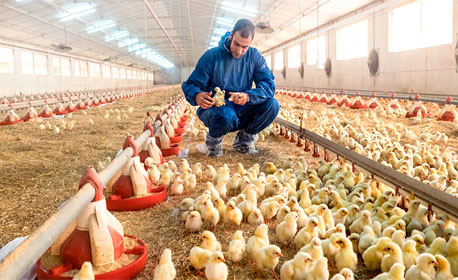
The quality of feed ingredients is important because inconsistent raw materials can affect diet formulation and flock performance. When selecting sodium bicarbonate for poultry feed, producers should consider:
- Feed-grade specifications and purity
- Consistency between batches
- Quality-control procedures
- Contaminant control
- Appropriate packaging and storage
- Reliable supply and technical support
Choosing a reliable Baking Soda manufacturer can help poultry producers maintain consistent product quality and supply. The product should be suitable for animal-feed applications and meet the required quality specifications.
Integrating Vaccination and Nutrition for Better Flock Health
The strongest flock-health strategy does not depend on vaccination alone. Vaccines provide targeted protection against specific infectious diseases, while nutrition and management help maintain the physiological condition required for healthy growth, production, and immune function. An effective poultry health program should therefore combine:
- A farm-specific poultry vaccination program
- Proper vaccine storage and administration
- Balanced nutrition
- Appropriate electrolyte management
- Adequate water quality and availability
- Heat-stress management
- Strong biosecurity
- Appropriate stocking density and ventilation
- Regular flock monitoring
Feed ingredients such as Sodium Bicarbonate can have a useful role within this broader strategy, particularly when dietary electrolyte balance and heat stress are important management considerations. They should, however, be used as part of a properly formulated diet rather than as a substitute for vaccination or other disease-control measures.
Conclusion
Poultry vaccines are essential tools for preventing important infectious diseases and maintaining stable flock performance. However, successful disease prevention requires more than selecting the right vaccines. Vaccination programs should be adapted to the production system, disease risks, maternal antibody levels, local regulations, and veterinary recommendations.
At the same time, good nutrition and environmental management help birds maintain normal physiological and immune functions. Feed Grade Sodium Bicarbonate Suitable for Poultry can contribute to dietary electrolyte and acid–base balance, particularly during heat stress, but its relationship with vaccination is supportive and indirect rather than that of a direct vaccine enhancer. Combining an appropriate vaccination program with balanced nutrition, electrolyte management, biosecurity, water quality, and effective environmental control provides a more comprehensive approach to flock health and sustainable poultry production.