
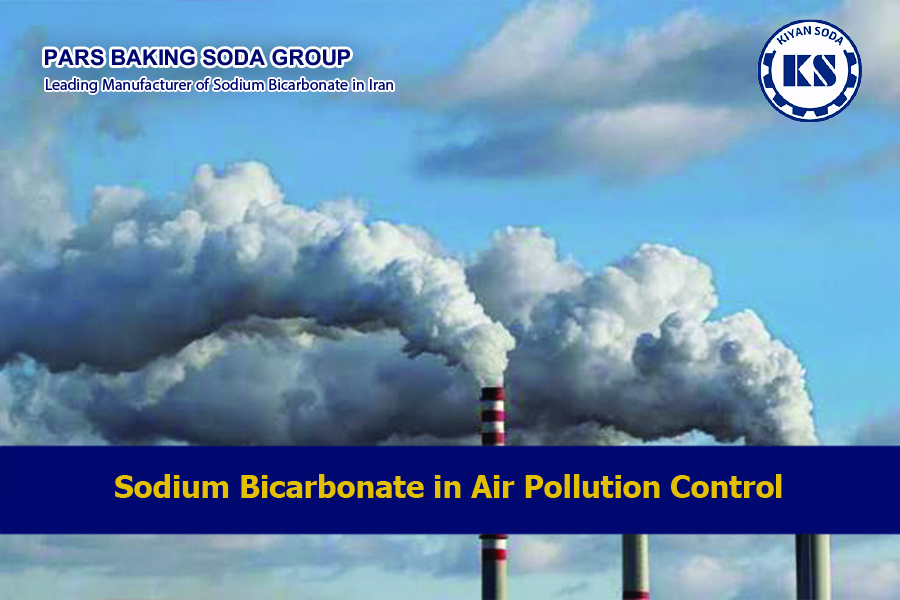
Industrial combustion, waste incineration, and chemical processing can release acidic gases that contribute to air pollution, equipment corrosion, and environmental damage. Effective emission control requires reliable treatment technologies that meet regulatory limits under changing operating conditions. Sodium bicarbonate is used in dry flue gas treatment because it reacts with several acidic pollutants and integrates with particulate collection systems. For industrial air pollution control, its suitability depends on the emission profile and the performance requirements of the treatment system. In dry sorbent injection (DSI), powdered sodium bicarbonate enters the flue gas, where thermal decomposition increases its reactivity. The resulting sodium compounds neutralize pollutants such as sulfur dioxide (SO₂) and hydrogen chloride (HCl), forming solid products for downstream collection. Effective sodium bicarbonate flue gas treatment depends on sorbent properties, gas composition, operating conditions, and system design.
Chemical Mechanisms of Sodium Bicarbonate in Flue Gas Treatment
Sodium bicarbonate acts as a precursor to reactive sodium compounds that neutralize acidic gases. In sodium bicarbonate flue gas treatment, performance depends on thermal activation, gas–solid contact, and the subsequent collection of reaction products.
Thermal Decomposition and Sodium Carbonate Formation
At suitable temperatures, sodium bicarbonate decomposes into sodium carbonate, carbon dioxide, and water vapor:
2NaHCO₃ → Na₂CO₃ + CO₂ + H₂O
This process can produce porous sodium carbonate with a greater accessible surface area, improving contact with acidic gas molecules. Activation depends on temperature, residence time, particle size, and material characteristics. Insufficient activation may limit reaction rates, so operating conditions must suit the treatment system.
Reactions with Acidic Gases

Sodium carbonate reacts with sulfur dioxide to form sodium sulfite and carbon dioxide:
Na₂CO₃ + SO₂ → Na₂SO₃ + CO₂
Under oxidizing conditions, sodium sulfite may subsequently convert to sodium sulfate. Hydrogen chloride reacts with sodium-based compounds to form sodium chloride and water, although reaction pathways depend on the chemical species and operating conditions.
These reactions transfer pollutants from the gas phase into solids for downstream collection. Actual removal efficiency depends on reaction kinetics, reagent utilization, gas composition, and particulate collection performance.
Industrial Applications of Sodium Bicarbonate in Air Pollution Control
Sodium bicarbonate is used where acidic emissions must be reduced before exhaust gases are released. Its suitability depends on pollutant profiles, required outlet concentrations, gas conditions, and existing treatment equipment. In industrial air pollution control, reagent selection should be based on measured emissions and the capabilities of the complete treatment system.
1. Control of Sulfur Oxides in Industrial Exhaust
Sulfur dioxide is produced by burning sulfur-containing fuels and by various industrial processes. Sulfur trioxide may also occur, depending on fuel composition and oxidation conditions. Sodium bicarbonate-based treatment can convert sulfur compounds into solid sodium salts and may suit selected boilers, industrial combustion systems, and other stationary sources.
System design should account for inlet concentrations, outlet limits, reagent consumption, and downstream collection capacity. Stringent emission limits may require additional treatment stages or alternative technologies. Removal of Hydrogen Chloride and Other Acidic Gases
Hydrogen chloride is an important pollutant in waste incineration and certain chemical processes. Depending on the source, flue gas may also contain hydrogen fluoride and other acidic compounds. Sodium bicarbonate can neutralize several of these pollutants, producing salts that are separated from the gas stream.
When multiple acidic gases are present, they compete for available reactive sodium, affecting reagent demand and individual removal efficiencies. Sorbent requirements should therefore reflect the complete gas composition rather than a single pollutant concentration.
2. Applications in Waste Incineration and Industrial Combustion
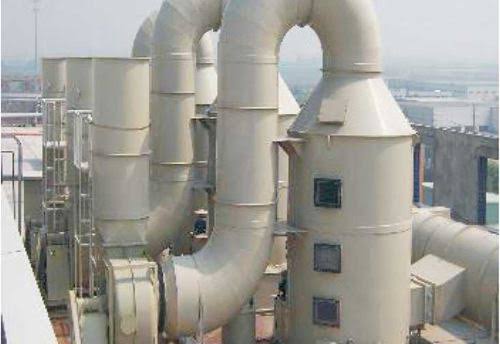
Waste incinerators can emit HCl, SO₂, and other contaminants, making dry sorbent treatment a potential component of their emission-control systems. Sodium bicarbonate injection is generally combined with particulate filtration and, where necessary, separate technologies for pollutants the sorbent cannot effectively remove.
Other potential applications include selected cement, glass, metallurgical, and chemical processes. Petrochemical operations also represent a potential application area, depending on process conditions and treatment requirements. The article on sodium bicarbonate in petrochemical industry explores these industrial applications in greater detail.
Suitability varies with gas temperature, dust loading, moisture, and contaminant composition. Sodium bicarbonate is not a universal treatment for nitrogen oxides, carbon monoxide, or most volatile organic compounds; these generally require different control technologies.
Design and Operation of Dry Sorbent Injection Systems
Dry sorbent injection relies on coordinated reagent preparation, controlled distribution, sufficient gas–solid contact, and effective particulate separation. Each stage affects treatment performance and operating costs.
- Sorbent Preparation and Injection
Sodium bicarbonate may require milling to achieve the particle-size distribution needed for a particular application. Particle size influences surface area, activation, dispersion, and reaction rate. The prepared material is conveyed and injected through a distribution system designed to promote uniform mixing. Poor distribution can leave untreated gas zones and increase reagent consumption.
Moisture exposure, powder flowability, storage conditions, and conveying reliability also affect reagent delivery. Preparation and injection equipment should match material characteristics and process requirements.
- Gas–Solid Contact and Reaction Time
After injection, the sorbent requires sufficient contact with acidic gases to achieve the target removal efficiency. Reaction time depends on duct geometry, gas velocity, injection location, and system configuration.
Increasing reagent dosage alone may not compensate for poor mixing or inadequate contact time. Injection placement and gas distribution should therefore be assessed alongside inlet and outlet emission measurements when optimizing sodium bicarbonate flue gas treatment.
- Filtration and Separation of Reaction Products
Particulate collection equipment removes spent sorbent, reaction products, and captured dust. Fabric filters, commonly called baghouses, are widely used, while electrostatic precipitators may suit certain configurations depending on process conditions and collection requirements.
In baghouse systems, the dust layer on the filter can provide additional opportunities for gas–solid reactions. Collected residue contains sodium salts, unreacted sorbent, and captured particulate matter. Its composition and handling requirements should be considered during system design.
Factors Determining Acid Gas Removal Efficiency
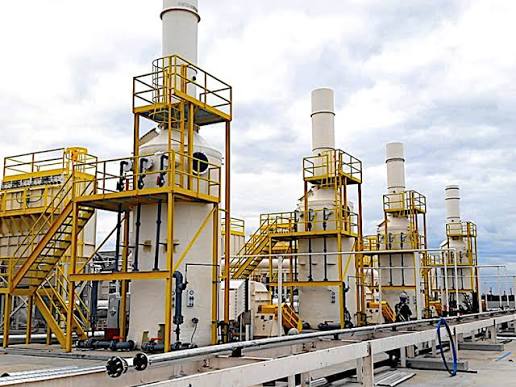
Removal efficiency depends on operating conditions, sorbent characteristics, and pollutant concentrations. Monitoring these variables helps improve reagent utilization and maintain stable emissions.
Flue Gas Temperature and Moisture
Temperature affects sodium bicarbonate decomposition and the reaction kinetics of the resulting sodium compounds. The appropriate operating range depends on injection location, gas composition, and system design.
Moisture can influence surface reactions and particle behavior, but excessive moisture may create handling problems, promote deposits, or affect filtration. Temperature and moisture should be evaluated together under actual operating conditions rather than against a universal optimum.
Particle Size and Stoichiometric Ratio
Smaller particles generally provide more surface area per unit mass and may react faster when adequately dispersed. However, milling energy, powder handling, and conveying performance must also be considered.
The stoichiometric ratio compares the amount of reagent supplied with the theoretical quantity required to react with the target pollutant. Industrial systems often need excess reagent because utilization is incomplete.
The optimum ratio depends on emission targets, gas composition, particle properties, and equipment configuration. Feed rates should be assessed against measured outlet concentrations to determine whether additional dosage meaningfully improves performance.
Gas Composition and Competing Reactions
HCl, SO₂, and other reactive compounds may compete for available sodium-based reagent, affecting consumption and pollutant-specific removal efficiencies. Dust loading, changing gas flow, and fluctuations in inlet concentrations can also influence results.
Reliable optimization combines inlet and outlet measurements with reagent feed rates, gas temperature, and particulate collection data. This helps distinguish insufficient reagent supply from limitations caused by mixing, contact time, or collection efficiency.
Advantages, Limitations, and Environmental Considerations
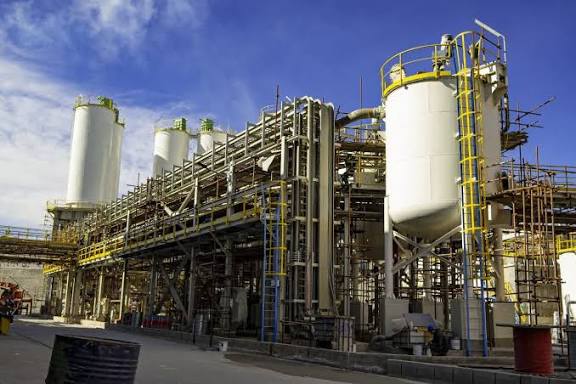
Sodium bicarbonate-based treatment can offer operational benefits, but suitability must be assessed against reagent demand, emission requirements, residue management, and alternative technologies. A complete air pollution control assessment should consider both removal performance and the operational demands of the entire treatment process.
1. Operational Benefits and Reagent Consumption
Dry sorbent injection generally requires less process water than wet scrubbing and may be integrated into existing exhaust treatment lines when suitable space and particulate collection equipment are available. Properly designed systems can accommodate variations in pollutant loading through adjustments to operating conditions and reagent feed.
However, reagent consumption is a significant operating cost. Excessive feed rates can increase material expenditure and residue volumes without proportional improvements in removal. Consistent material quality, effective mixing, and process monitoring help control these costs.
2. Solid Residue Management and Environmental Assessment
Dry treatment transfers pollutants from the gas phase into collected solids; it does not eliminate their mass from the process. Residue may contain sodium salts, unreacted sorbent, and captured particulate matter. Handling and disposal requirements depend on chemical composition, applicable waste regulations, and the potential for constituents to leach.
Residue characterization may be necessary to determine appropriate recovery, treatment, or disposal routes. Although dry systems can reduce water demand, their overall environmental performance also depends on reagent production, energy consumption, transport, and residue management. Environmental benefits should be assessed across the relevant process rather than inferred from water use alone.
3. Comparison with Lime-Based and Wet Scrubbing Systems
Sodium bicarbonate, lime-based reagents, and wet scrubbers differ in reaction behavior, equipment requirements, water consumption, and residue characteristics. Sodium bicarbonate-based dry systems may suit applications prioritizing dry handling and effective acid gas removal. Lime-based systems may be attractive under particular reagent-cost or process conditions, while wet scrubbing can achieve high removal efficiencies but generally requires liquid handling and wastewater management.
Technology selection should account for inlet pollutant concentrations, outlet limits, plant layout, operating costs, water availability, and waste-management requirements. No single treatment method is optimal for every industrial application.
Technical Requirements for Sorbent Selection and Process Compatibility
Industrial-grade classification alone does not establish whether sodium bicarbonate is suitable for direct injection. Its chemical and physical specifications must match the treatment system.
- Purity, Particle Size, and Material Consistency
Purity affects the proportion of active material available for reaction, while particle size influences activation, surface area, and dispersion. Batch consistency is also important because changes in material properties can affect feeding behavior and treatment performance. Depending on the system, milling or other preparation may be required before use.
- Matching Material Specifications to Process Requirements
Sorbent evaluation should consider chemical composition, particle-size distribution, moisture content, storage stability, handling characteristics, and compatibility with injection equipment. The importance of each specification depends on process design and target pollutants. Facilities assessing industrial grade sodium bicarbonate should compare product specifications with the technical requirements of their intended application before confirming suitability.
When sourcing material, buyers should also assess documentation, batch consistency, supply reliability, and access to relevant technical information. Pars Baking Soda Group is a potential source to consider when evaluating industrial sodium bicarbonate supply. Product suitability should be established using verified specifications and the requirements of the individual emissions-control system.
Conclusion
Sodium bicarbonate is used to control acidic emissions, particularly SO₂ and HCl, in dry flue gas treatment. Reliable sodium bicarbonate flue gas treatment depends on thermal activation, particle characteristics, gas composition, reaction conditions, and downstream particulate collection. Effective air pollution control requires an integrated assessment of emission targets, reagent consumption, equipment compatibility, and residue management. Selecting a suitable sorbent and optimizing the complete treatment process are essential for reliable performance and compliance with applicable environmental regulations.
Frequently Asked Questions
Sodium bicarbonate-based systems are primarily used to control sulfur dioxide (SO₂) and hydrogen chloride (HCl). Removal of other acidic compounds depends on their chemistry, gas composition, operating conditions, and system design.
Dry sorbent injection does not generally use water as its primary reaction medium, unlike wet scrubbing. Flue gas moisture can still influence reactions and material handling, while some installations may use water for separate purposes.
Higher pollutant loading, stricter outlet limits, incomplete reagent utilization, and poor gas–solid mixing can increase consumption. Feed rates should be established through process calculations and adjusted according to operating data and measured emissions.
The reagents differ in reaction kinetics, physical properties, operating requirements, and residue characteristics. The preferred option depends on emission targets, process conditions, reagent costs, equipment configuration, and waste-management requirements.
It neutralizes selected acidic gases and converts them into solid reaction products that can be collected downstream. The overall effectiveness of air pollution control depends on appropriate reagent selection, system design, operating conditions, and particulate separation.