
Fire extinguishers rely on carefully selected chemical agents to suppress flames quickly and prevent them from continuing to spread. A key example is baking soda fire extinguishing, where sodium bicarbonate plays an important role among dry chemical agents, particularly in extinguishers designed for flammable liquid, flammable gas, and energized electrical fires. Although sodium bicarbonate is widely known as baking soda, its firefighting applications depend on its chemical behavior and its formulation as a dry extinguishing agent. In a properly designed sodium bicarbonate fire extinguisher, the powder is discharged onto the flame and interferes with the chemical reactions that sustain combustion. Understanding how sodium bicarbonate works in fire extinguishing can help manufacturers, industrial users, and buyers better evaluate this material and its role in fire protection systems.
The Role of Sodium Bicarbonate in Fire Extinguishers
Sodium bicarbonate (NaHCO₃) is a white, alkaline compound widely used in food, chemical processing, and industrial applications. In firefighting, sodium bicarbonate can be formulated as a dry chemical extinguishing agent.
Dry chemical extinguishers are designed to deliver finely divided powder onto a fire. Unlike water, which primarily suppresses flames through cooling, dry chemical agents can act directly on the combustion process. According to the National Fire Protection Association (NFPA), sodium bicarbonate-based dry chemical extinguishers are primarily intended for Class B and Class C fires.
The effectiveness of sodium bicarbonate in this application is associated with its ability to interfere with the chemical chain reaction responsible for sustaining flames. This makes it particularly useful where rapid flame knockdown is required.
The Mechanism of Baking Soda Fire Extinguishing
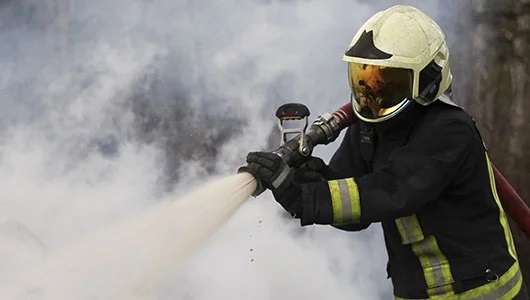
The principle behind baking soda fire extinguishing is more sophisticated than simply releasing carbon dioxide around a flame. When sodium bicarbonate-based dry chemical is exposed to the high temperatures of a fire, it undergoes thermal decomposition and participates in reactions within the flame zone. The discharged particles interfere with the combustion chemistry and help interrupt the chain reactions that allow a flame to continue propagating.
This chemical interference is one of the main reasons dry chemical agents can extinguish certain flames rapidly. NFPA describes dry chemical extinguishment as an interaction between dry chemical particles and the combustion chain reaction.
The powder also physically separates parts of the flame from the fuel and surrounding environment. Together, these effects can produce rapid flame suppression. It is therefore more accurate to describe sodium bicarbonate as a chemical extinguishing agent rather than claiming that it works only by releasing CO₂ and “smothering” the fire.
Fire Classes Suitable for Sodium Bicarbonate
One of the most important considerations when evaluating a sodium bicarbonate fire extinguisher is the type of fire it is designed to handle.
Class B Fires
Class B fires involve flammable and combustible liquids and, depending on the classification system, flammable gases. Sodium bicarbonate-based dry chemical agents are widely associated with Class B fire protection.
When the powder is discharged into the flame, its chemical action rapidly interferes with combustion. This makes sodium bicarbonate-based dry chemical particularly useful where rapid flame knockdown is important.
Class C Fires
Sodium bicarbonate-based dry chemical agents are also used for fires involving energized electrical equipment. NFPA materials identify sodium bicarbonate-based dry chemical as suitable for Class C hazards.
However, fire classification and extinguisher suitability should always be determined according to the applicable standards and the specific extinguisher’s listing or rating. The presence of electricity introduces additional safety considerations, and extinguishers should be selected and operated according to their approved applications.
The Limitation for Class A Fires
Sodium bicarbonate-based dry chemical is not generally recommended as the primary extinguishing agent for ordinary Class A combustibles such as wood, paper, and fabrics. It may temporarily suppress surface flames, but it does not provide the same capability for deep-seated Class A fires as multipurpose dry chemical agents.
This distinction is important because ABC extinguishers commonly use monoammonium phosphate rather than sodium bicarbonate. NFPA identifies multipurpose ammonium phosphate dry chemical as suitable for Class A, B, and C fires, while bicarbonate-based dry chemicals are recognized primarily for Class B and C hazards.
Sodium Bicarbonate vs. Other Dry Chemical Fire Extinguishing Agents
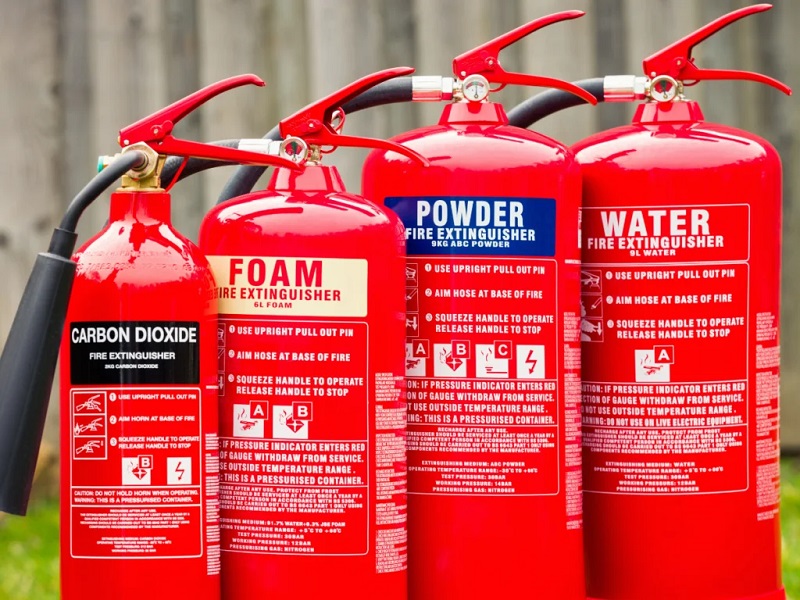
Not all dry chemical fire extinguishers contain the same active ingredient. Common dry chemical agents include sodium bicarbonate, potassium bicarbonate, and monoammonium phosphate. Their performance and approved applications are not identical.
| Dry Chemical Agent | Typical Fire Classes | Key Characteristic |
| Sodium bicarbonate | Class B and C | Rapid chemical flame suppression |
| Potassium bicarbonate | Class B and C | Strong chemical extinguishing action |
| Monoammonium phosphate | Class A, B and C | Multipurpose protection |
Potassium-based dry chemical agents can provide stronger chemical extinguishing performance in some Class B applications. However, sodium bicarbonate remains an established dry chemical agent for appropriate fire protection applications. For this reason, selecting an extinguishing agent should not be based solely on the general reputation of a chemical. The intended fire class, extinguisher design, formulation, testing, and applicable standards all matter.
The Critical Importance of Sodium Bicarbonate Quality
The performance of a dry chemical extinguishing agent depends on more than simply having sodium bicarbonate as its chemical base. Physical properties such as particle characteristics, flowability, moisture resistance, and storage stability can influence how effectively a powder is stored, discharged, and distributed over a fire.
For industrial applications, buyers may therefore look for industrial-grade sodium bicarbonate with consistent chemical and physical specifications appropriate for the intended use. A material intended for a specific firefighting formulation may also require additional processing or formulation steps before it becomes a finished extinguishing agent. Therefore, industrial sodium bicarbonate should not automatically be described as a ready-to-use fire-extinguishing powder.
For manufacturers and industrial buyers, consistency between batches is particularly important. Variations in purity, particle characteristics, moisture content, or handling properties can affect downstream processing and product performance.
Key Properties of Sodium Bicarbonate for Industrial Applications
Several characteristics can be relevant when sodium bicarbonate is considered as a raw material for industrial formulations.
- Chemical Purity: Consistent chemical composition provides a reliable starting point for downstream manufacturing. Buyers should review technical specifications and certificates of analysis where applicable.
- Particle Characteristics: Particle size and distribution can influence powder handling, flow, dispersion, and interaction with the flame. The required characteristics depend on the formulation and the intended extinguishing system.
- Moisture Control: Dry chemical powders need suitable storage and handling conditions. Moisture can contribute to caking and reduce the ease with which a powder flows through equipment.
- Storage Stability: Industrial sodium bicarbonate should be stored according to supplier recommendations to preserve its quality before processing or use.
- Consistency Between Batches: For manufacturers, predictable raw material properties can support more consistent production and quality control.
These considerations are especially relevant when evaluating suppliers of sodium bicarbonate for industrial applications. The correct specification should always be selected according to the final product requirements rather than assuming that one grade is appropriate for every application.
Applications of Sodium Bicarbonate-Based Dry Chemical Agents
Sodium bicarbonate-based dry chemical agents have applications in fire protection where rapid suppression of Class B and Class C hazards is required. They may be relevant to environments involving:
- Flammable liquids
- Flammable gases
- Energized electrical equipment
- Selected industrial fire hazards
- Certain cooking-related fire hazards, subject to the applicable extinguisher rating and fire-protection requirements
For cooking fires, however, the choice of extinguishing agent requires particular care. NFPA materials note that wet chemical extinguishers can provide substantially greater cooking-fire extinguishing capability than minimum-rated sodium bicarbonate or potassium bicarbonate dry chemical extinguishers under modern cooking conditions.
This illustrates an important principle: the right extinguishing agent depends on the specific fire hazard, not simply on whether a chemical is capable of suppressing flames under some conditions.
Choosing Sodium Bicarbonate for Industrial Use
For manufacturers and distributors evaluating sodium bicarbonate, product selection should begin with the intended application and technical requirements. Important factors can include:
- Chemical purity and specification
- Particle size and physical characteristics
- Moisture content
- Packaging and storage conditions
- Batch-to-batch consistency
- Supplier quality control
- Technical documentation
- Supply capacity and logistics
Companies purchasing sodium bicarbonate as an industrial raw material should also distinguish between a general industrial-grade material and a finished, tested fire-extinguishing formulation.
For broader information about available Baking Soda products, buyers can review the technical specifications, intended applications, and supply options associated with each product rather than relying on the generic name “baking soda” alone.
For manufacturers evaluating sodium bicarbonate supply options, Pars Baking Soda provides a product-focused reference point for exploring sodium bicarbonate and its industrial applications. The suitability of any specific product for a fire-extinguishing formulation should be determined from its technical specifications and the requirements of the final application. Explore the available grades to find the right match for your manufacturing needs.
Important Considerations for Sodium Bicarbonate Fire Extinguishers
A sodium bicarbonate fire extinguisher can provide effective protection when it is correctly selected for the fire hazard for which it has been designed and approved. However, the presence of sodium bicarbonate alone does not determine extinguisher performance. The complete system includes the extinguishing powder, its formulation, the extinguisher cylinder, discharge mechanism, nozzle, pressure system, and applicable testing and certification requirements.
Dry chemical agents can also leave residue after discharge. In some environments, particularly around sensitive equipment, post-fire cleanup may therefore be important. NFPA documentation notes that removal of dry chemical residues from certain electrical equipment after extinguishment may be recommended. For this reason, fire extinguisher selection should always follow applicable fire-safety standards and manufacturer instructions.
Conclusion
Sodium bicarbonate has an established role in dry chemical fire suppression because of its ability to interfere with the chemical chain reactions that sustain flames. In suitable formulations, sodium bicarbonate-based extinguishing agents are primarily used for Class B and Class C hazards, including flammable liquids, gases, and energized electrical equipment.
However, effective firefighting depends on much more than the chemical itself. Purity, particle characteristics, moisture control, formulation, extinguisher design, testing, and fire classification all contribute to performance.
For industrial manufacturers and buyers, selecting a consistent sodium bicarbonate supply with appropriate technical specifications is therefore an important part of producing reliable downstream products. Understanding these requirements can help businesses make better decisions when evaluating sodium bicarbonate for industrial applications and fire-protection formulations. For specific technical data, bulk inquiries, or to discuss your formulation requirements, contact Pars Baking Soda today.
FAQ
Yes. Sodium bicarbonate is used as the active chemical in certain dry chemical fire-extinguishing agents. Its effectiveness comes primarily from interfering with the chemical chain reactions that sustain combustion rather than simply from producing carbon dioxide.
Sodium bicarbonate-based dry chemical extinguishers are primarily associated with Class B and Class C fires, including flammable liquid and gas hazards and energized electrical equipment.
It is generally not the preferred agent for ordinary Class A fires involving materials such as wood, paper, and fabrics. Multipurpose monoammonium phosphate dry chemical is designed for Class A, B, and C applications.
No. Sodium bicarbonate used as a raw material should not automatically be considered a finished fire-extinguishing agent. The required chemical and physical properties depend on the final formulation, equipment, testing, and application.
Both are used in dry chemical fire suppression, particularly for Class B and C hazards. Potassium bicarbonate can offer stronger chemical extinguishing performance in some Class B applications, while sodium bicarbonate remains a widely established dry chemical agent for appropriate applications.